
Overview
What is oil condition monitoring?
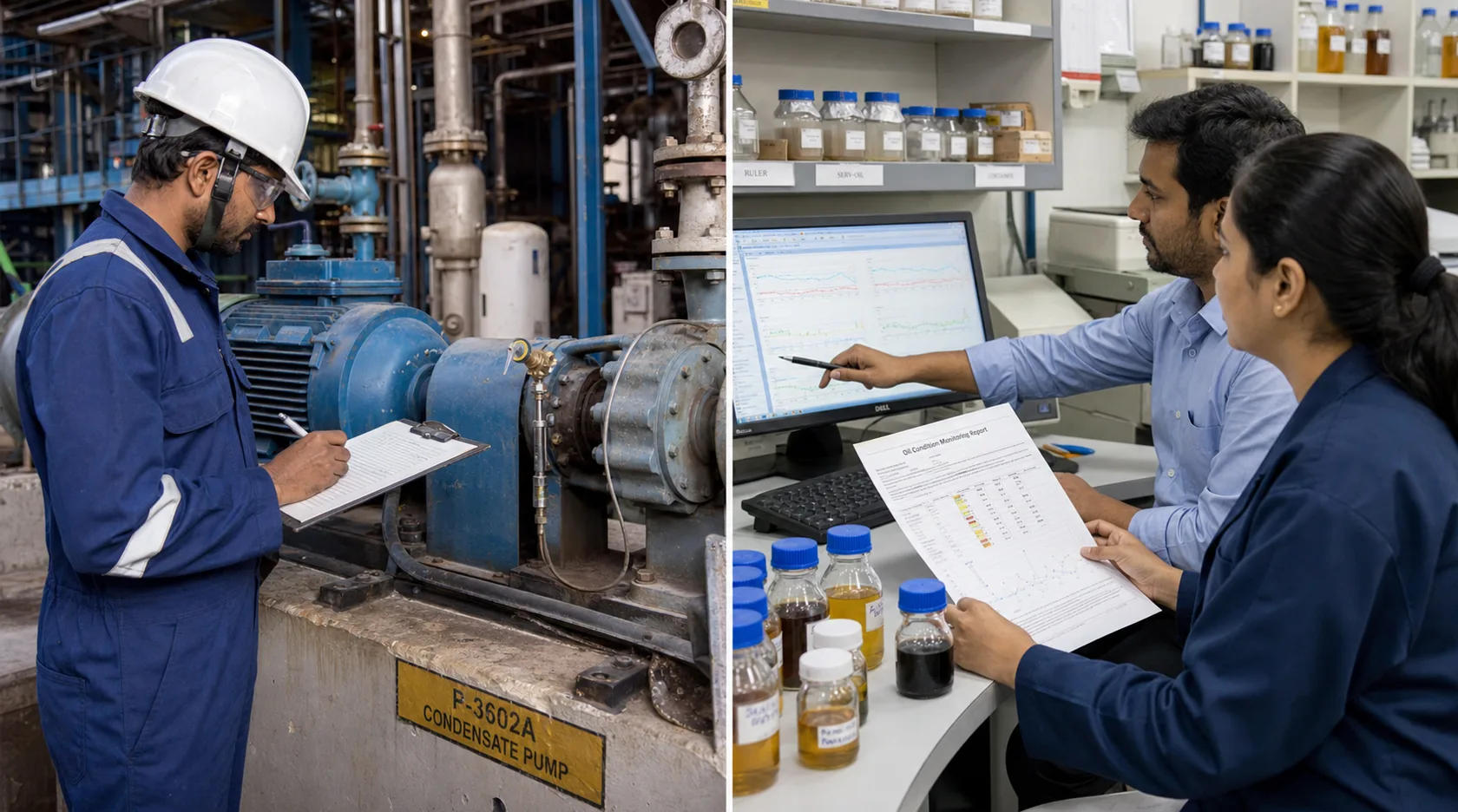
Chem-Tech Laboratories Oil Condition Monitoring (OCM) programmes help clients avoid costly machinery downtime, equipment failures, loss of equipments by tracking changes in equipment lubricant quality. The key to the health of the equipment lies to the effective predictive maintenance programmes that are in place, which ultimately will help increase reliability and reduce cost of ownership. As part of such routine programmes the monitoring of the vessels lubricants will assist Operators and Maintenance workers in making timely decisions relating to the servicing of equipment, maximising the lifespan of engine parts & machinery through Oil testing, grease testing programmes
Application context
Applications and equipment
Avoid Failures
Reduce Maintenance Cost
Increase Equipment Life
Extend operational availability
Reduce maintenance
Improve safety
Oil Condition Monitoring Services for a wide variety of industries
- Mining OCM Testing
- Construction Machinery OCM Testing
- Truck Fleet OCM Testing
- Industrial OCM Testing
- Marine OCM Testing
- Wind Turbine OCM Testing
- Power Generation OCM Testing
Key Features of Chem-Tech Oil Condition Monitoring Services
- 24 X 7 access to reports
- Diagnosis by Certified Lubrication Professionals
- 48 Hours Turn Around Time
- Trend Analysis
- Online Equipment Management
Start your Oil Condition Monitoring (OCM) Programme
Our testing combines the expertise of the diagnostic engineers with the latest techniques for analyzing lubricating oils, grease & metalworking fluids. Both the physical and chemical characteristics of the lubricants and fluids are checked, identifying information on the wear of metals and the physical properties of the oil itself. We are able to carry out sampling for you, or can provide inexpensive easy-to-use kits. Samples can then be shipped to our laboratories, with routine turnaround within 48 hours of receipt of the sample. Turnaround time can be reduced for urgent samples. Our team of experts can provide state of the art tribology analysis to better understand the causes of component failure. Additionally, all our experts can train your staff on how to use the OCM Testing Programs
Technical review
Common condition and contamination concerns
Lubricant degradation
Viscosity, acidity and FTIR indicators support review of lubricant change during service.
Water and external contamination
Water, particles and contaminant elements are interpreted with the equipment and sampling context.
Wear-related material
Elemental and ferrous-debris results support condition review when trend history is available.
Trend consistency
Comparable sampling points, operating conditions and intervals are important for meaningful trend review.
Published laboratory capability
Tests and test methods
The methods below are matched to Chem-Tech's controlled technical test lists and published laboratory capability. The final scope is confirmed for the sample, specification and current laboratory capability.
| Test / parameter | Published test method | Technical purpose | Interpretation / high-low context |
|---|---|---|---|
| Total Acid Number | ASTM D664 / ASTM D974 | Measures acidic constituents under the selected method. | An increase from the reference may support oxidation or acidic-contamination review; a single result must be compared with product and service history. |
Before dispatch
Sample-submission guidance
- Use a clean, secure and appropriately labelled container.
- Provide the sample identity, fluid grade and equipment or system details where applicable.
- Share operating hours, maintenance history, the suspected problem and required specification where available.
- Contact Chem-Tech before dispatch so the laboratory can confirm the sample quantity, container and selected testing scope.
Technical output
Reporting and interpretation
The report records results and methods for the agreed scope. Customer-supplied limits or specifications can be considered when provided before testing.
Results should be reviewed with equipment history, operating conditions and previous data; a laboratory result alone does not guarantee a root-cause diagnosis or remaining service life.
Read Basics of Oil AnalysisDiscuss your requirement
Need more information?
Share the lubricant type, equipment and testing objective with the Chem-Tech team.