
Overview
What is gear oil testing?
Gear oil testing evaluates fresh and in-service lubricants used in industrial gearboxes, automotive gear systems and other heavily loaded geared equipment. The laboratory scope can be selected to review lubricant condition, contamination and wear-related material.
In-service results are most useful when the sample identity, oil grade, equipment details, operating hours, maintenance history and previous trend data are supplied. Fresh-oil analysis can also provide a reference for later condition-monitoring results or support comparison with a customer-supplied specification.
Chem-Tech's published Oil Analysis capability includes viscosity, acid number, water, elemental analysis, PQ Index, FTIR and analytical ferrography. The applicable combination is confirmed for the oil type and the purpose of the investigation.
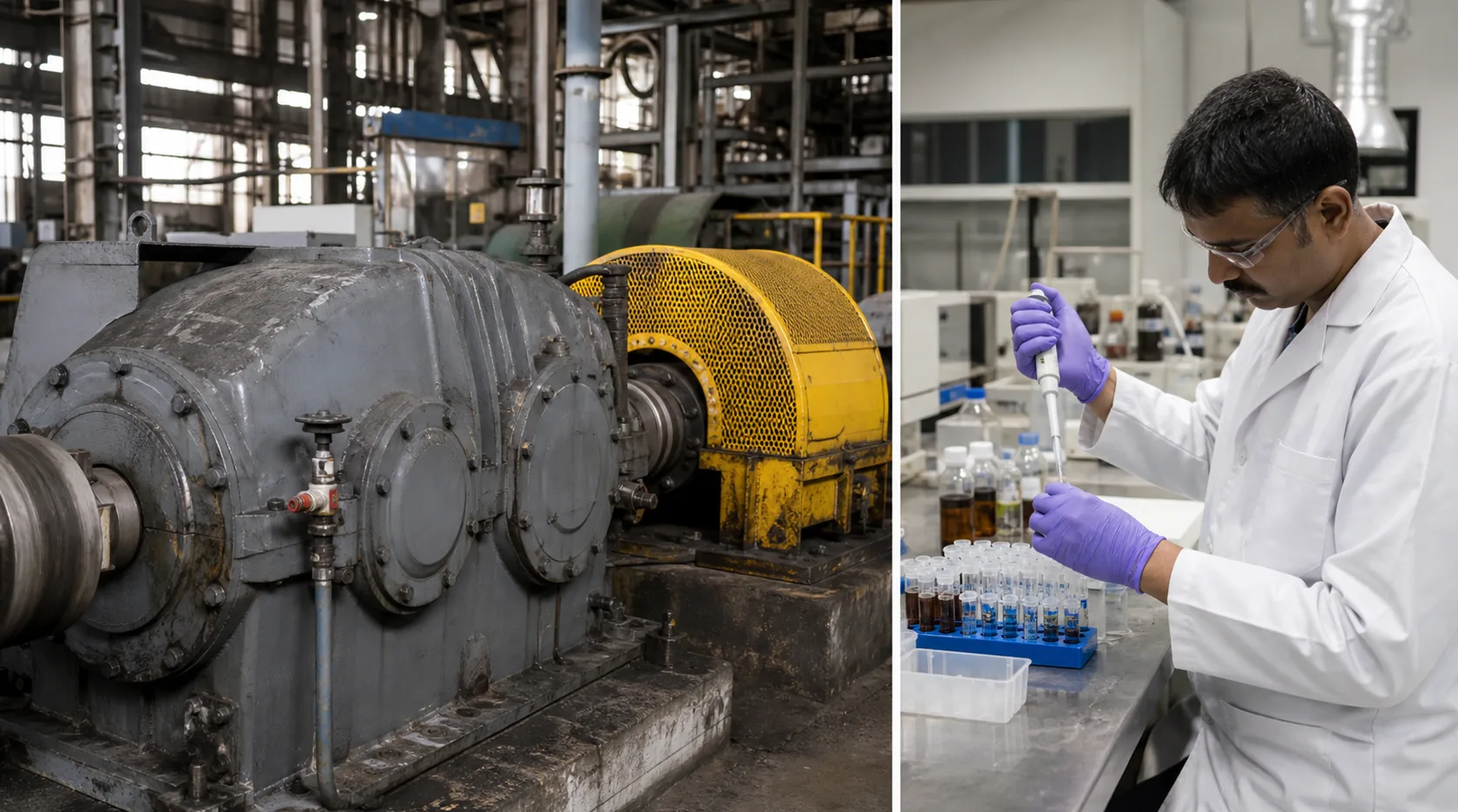
Application context
Applications and equipment
Industrial gearboxes
Automotive gear systems
Enclosed gears and circulating systems
Fresh and used gear oils
Testing rationale
Why gear oil testing is required
Gear oils operate between loaded tooth surfaces and within bearings, shafts and circulating systems. A change in oil condition or the entry of water, dirt or another lubricant can affect the evidence seen in a used-oil sample.
Viscosity, acid number and FTIR results can support review of lubricant condition. Water, elemental analysis, PQ Index and ferrography can add contamination and wear-debris information where the investigation requires it.
No single result establishes equipment condition. Trend data, the fresh-oil baseline, component metallurgy, filtration, maintenance activity and operating conditions should be reviewed together.
Technical review
Common condition and contamination concerns
Viscosity change
Viscosity results support comparison with the oil grade, reference oil or supplied requirement.
Water contamination
Water testing supports investigation of ingress, storage or operating-environment concerns.
Wear debris
Elemental and ferrous-debris information may support condition review when equipment history is available.
Published laboratory capability
Tests and test methods
The methods below are matched to Chem-Tech's controlled technical test lists and published laboratory capability. The final scope is confirmed for the sample, specification and current laboratory capability.
| Test / parameter | Published test method | Technical purpose | Interpretation / high-low context |
|---|---|---|---|
| Appearance | CTP T 112 | Records the visible condition of the submitted sample. | May identify haze, sediment, free water, discolouration or an unexpected physical change. |
| Kinematic viscosity at 40 deg C | ASTM D445 / ASTM D7042 | Measures resistance to flow at a controlled temperature. | Supports review of grade consistency, degradation, contamination or lubricant mixing. |
| Kinematic viscosity at 100 deg C | ASTM D445 / ASTM D7042 | Provides an additional high-temperature viscosity result where required. | Supports comparison with reference oil or an applicable customer-supplied requirement. |
| Viscosity Index | ASTM D2270 | Calculates the relationship between viscosity results at two temperatures. | Supports assessment of viscosity-temperature behaviour when both input results are available. |
| Total Acid Number | ASTM D664 / ASTM D974 | Measures acidic constituents under the selected method. | May support review of oxidation or contamination-related change. |
| Water content | ASTM E203 / ASTM D1744 / ASTM D6304 | Quantifies water present in the lubricant sample. | Supports investigation of ingress, condensation, storage or handling contamination. |
| Elemental analysis | ASTM D5185 / ASTM D6595 | Reports selected wear, contaminant and additive elements. | Supports review with gearbox metallurgy, formulation and previous trend data. |
| PQ Index | ASTM D8184 | Measures the relative presence of ferromagnetic wear debris. | Can complement elemental analysis when larger ferrous material may be relevant. |
| FTIR condition indicators | ASTM E2412 | Reviews selected infrared condition indicators. | May support comparison of oxidation, nitration or other spectral change with a suitable reference. |
| Analytical ferrography | ASTM D7690 | Examines the morphology and distribution of wear debris. | Can support a wider wear investigation when equipment and operating information are supplied. |
Before dispatch
Sample-submission guidance
- Use a clean, secure and appropriately labelled container. Identify the sample, lubricant grade and the equipment or system from which it was collected.
- Where available, provide operating hours, oil-change history, top-up information, the suspected problem, previous results and the required specification or parameters.
- The required sample quantity and container depend on the selected test scope and oil type. Contact Chem-Tech before dispatch so the laboratory can confirm the requirement.
Technical output
Reporting and interpretation
The report records the agreed test results and the methods used for the selected scope. Customer-supplied limits or specifications can be considered where they are provided before testing.
Results can support condition assessment and investigation when reviewed with equipment history, operating conditions and previous test data. A laboratory result alone should not be treated as a guaranteed root-cause diagnosis or remaining-life prediction.
Read Basics of Oil AnalysisDiscuss your requirement