
01
ICP/OES Elemental Analysis
Elemental-analysis capability supporting applicable metals, additive-element and contaminant-element measurements.
- Lubricants and greases
- Food and agri products
- Water and compliance testing
COMPANY · LABORATORY CAPABILITY
Built around reliable analytical work
Chem-Tech Laboratories supports petroleum products, lubricants, fuels, food and agricultural products, water, and product-compliance testing. The laboratory combines instrumental analysis, physical-property measurement, microscopy and controlled sample preparation.
Each sample is identified, prepared and assigned to the applicable method. Results pass through technical review and controlled reporting. This workflow supports routine monitoring, investigations and consultancy.
Facilities by testing division
Choose a division to see its principal instruments and laboratory systems.
01 · Testing division
Physical-property, condition-monitoring and instrumental systems supporting oils, greases and industrial-fluid analysis.
Elemental-analysis capability supporting applicable metals, additive-element and contaminant-element measurements.
Infrared analysis for applicable material comparison and lubricant-condition indicators under selected procedures.
Tribological testing of applicable lubricants to assess friction, wear and load-related performance under the selected procedure.
Automated viscosity and density measurement for applicable liquid petroleum products and lubricants.
Automated titration workflow for Total Acid Number and Total Base Number measurements in applicable oil samples.
Automated oven-assisted sample introduction for Karl Fischer moisture determination in applicable samples.
Particle-size distribution and cleanliness assessment supporting applicable lubricant and hydraulic-fluid condition review.
Physical-property systems for flash and fire point measurement using the procedure applicable to the product and requirement.
02 · Testing division
Analytical platforms for fuel composition, distillation behaviour, moisture, elemental screening and selected solid-fuel properties.
Chromatographic separation and measurement of applicable volatile and semi-volatile constituents under the selected test method.
Infrared analysis for applicable material comparison and lubricant-condition indicators under selected procedures.
X-ray fluorescence analysis supporting applicable elemental screening and selected petroleum-product measurements.
Automated viscosity and density measurement for applicable liquid petroleum products and lubricants.
Automated distillation-profile measurement for applicable fuels and petroleum products under the selected method.
Automated oven-assisted sample introduction for Karl Fischer moisture determination in applicable samples.
Physical-property systems for flash and fire point measurement using the procedure applicable to the product and requirement.
Sample-preparation and measurement capability supporting applicable coal, coke and briquette testing requirements.
03 · Testing division
Chromatography, spectroscopy and elemental-analysis systems used for applicable food and agricultural-product testing scopes.
Chromatographic separation and measurement of applicable volatile and semi-volatile constituents under the selected test method.
Combines chromatographic separation with mass-spectral detection for applicable identification and measurement requirements.
Liquid-chromatographic separation and measurement for selected non-volatile constituents in applicable sample matrices.
Separation and measurement of applicable ionic constituents according to the sample type and selected method.
Elemental-analysis capability supporting applicable metals, additive-element and contaminant-element measurements.
Absorbance-based measurement for applicable analytical procedures across selected liquid and prepared samples.
04 · Testing division
Instrumental and wet-chemistry capability for applicable drinking-water, process-water and wastewater requirements.
Combines chromatographic separation with mass-spectral detection for applicable identification and measurement requirements.
Liquid-chromatographic separation and measurement for selected non-volatile constituents in applicable sample matrices.
Separation and measurement of applicable ionic constituents according to the sample type and selected method.
Elemental-analysis capability supporting applicable metals, additive-element and contaminant-element measurements.
Absorbance-based measurement for applicable analytical procedures across selected liquid and prepared samples.
05 · Testing division
Elemental screening, microscopy and material-analysis systems supporting applicable product and component investigations.
Combines chromatographic separation with mass-spectral detection for applicable identification and measurement requirements.
Elemental-analysis capability supporting applicable metals, additive-element and contaminant-element measurements.
Infrared analysis for applicable material comparison and lubricant-condition indicators under selected procedures.
X-ray fluorescence analysis supporting applicable elemental screening and selected petroleum-product measurements.
Microscopic examination and particle classification supporting applicable component-cleanliness investigations.
Laboratory operations
Chem-Tech connects sample handling, analysis, review and reporting in one controlled workflow.
The laboratory records each sample against its identity and testing requirement.
The sample type, objective and applicable specification guide preparation and method selection.
Testing can combine instrumental analysis, physical-property measurement, microscopy and wet chemistry.
Results pass through technical review and controlled reporting. Paperless records support traceability.
Laboratory environment
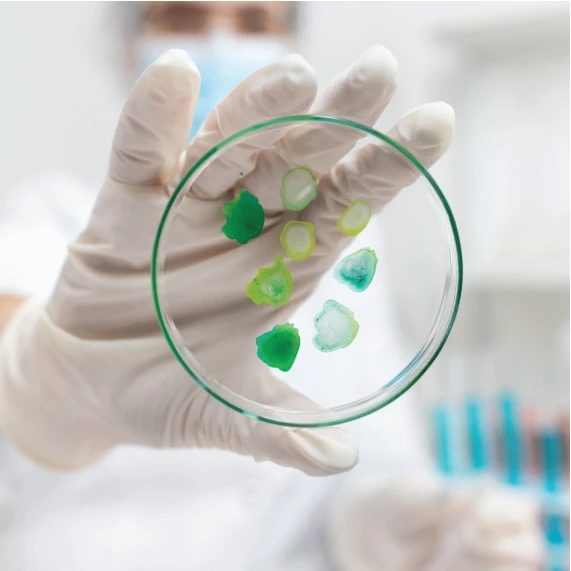
The images show key stages in sample preparation, handling and analysis.



Verify the current capability
Review the published test lists, then contact Chem-Tech to confirm the current scope for your sample.
Analytical workflow
Laboratory capability is more than an equipment list. Sample identity, preparation, method selection, instrument readiness, quality checks, technical review and record traceability work together to produce a controlled report.
Sample identity, condition and requested scope are recorded before preparation and analysis.
Instrumental analysis, physical-property measurement, microscopy and wet chemistry are selected for the matrix and objective.
Method-appropriate checks, calibration status and documented laboratory practices support analytical control.
Results move through review and controlled reporting with supporting sample and method records.
Discuss your analytical requirement