
Overview
Lubricant testing and oil analysis
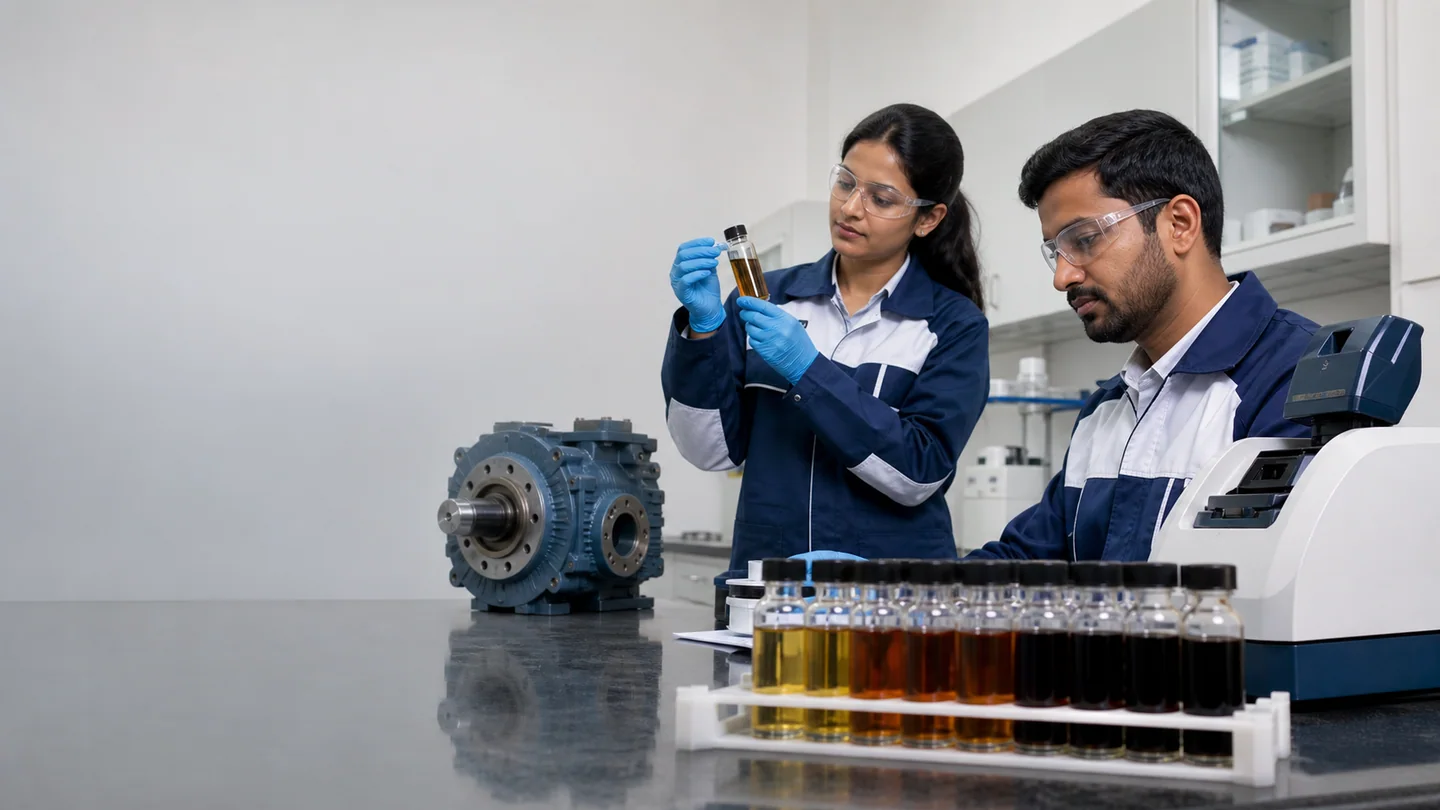
Chem-Tech® Laboratories provides testing and analysis services for lubricants, petroleum products and industrial fluids used in equipment and machinery. The laboratory supports oil condition monitoring, lubricant quality assessment and investigation of fluid-related operating concerns.
The combined capability covers fresh and used lubricating oils, grease, coolant, AdBlue, metalworking fluids, quenching oils and thermic fluids. Samples may be submitted to the central laboratory with equipment, lubricant and operating information so that the appropriate scope can be selected.
Lube oil analysis can provide information about changes taking place within a machine and its lubricant. The programme objective may include oil-condition monitoring, machine-condition analysis, trend review, improved lubrication practices and interpretation of oil-analysis data.
Testing directory
Lubricants and fluids testing by application
Select the lubricant or fluid application that matches the equipment and testing objective.
Industrial machinery, mobile equipment and rotating assets
Oil Condition Monitoring
Condition-monitoring programmes that connect lubricant trends with equipment, maintenance and operating information.
Learn moreAutomotive, diesel, gas and industrial engines
Engine Oil Testing
Assessment of fresh and used engine lubricants for degradation, contamination and wear-related indicators.
Learn moreIndustrial and automotive gear systems
Gear Oil Testing
Evaluation of lubricants used in gearboxes and geared systems for condition, contamination and wear.
Learn moreAutomatic, manual and industrial transmissions
Transmission Oil Testing
Condition assessment for transmission oils and fluids where viscosity change, contamination or wear is under review.
Learn moreAxles, differentials and severe-duty final drives
Axle Oil Testing
Focused review of lubricants used in axles, differentials and final-drive systems.
Learn morePumps, valves, servo systems and hydraulic machinery
Hydraulic Oil Testing
Assessment of hydraulic-fluid condition, cleanliness, contamination and wear-related indicators.
Learn moreSteam, gas and hydro turbine lubrication systems
Turbine Oil Testing
Condition assessment for turbine lubricants, including oxidation, water, acidity and cleanliness-related concerns.
Learn moreAir, gas and refrigeration compressor systems
Compressor Oil Testing
Review of compressor lubricant condition where oxidation, acidity, water or deposits may be relevant.
Learn moreMachining, cutting and metal-forming operations
Metal Working Fluid Testing
Testing of neat and water-miscible metalworking fluids for condition, concentration and contamination concerns.
Learn moreMetal hardening and heat-treatment processes
Quenching Oil Testing
Evaluation of in-use and fresh quenching oils used in controlled heat-treatment operations.
Learn moreIndustrial heat-transfer and thermic-fluid systems
Thermic Fluid Testing
Assessment of heat-transfer-fluid condition and thermal degradation indicators.
Learn moreBearings, chassis, industrial machinery and specialised applications
Grease Testing
Fresh and in-service grease analysis for consistency, contamination and performance-related properties.
Learn moreEngines, cooling circuits and industrial equipment
Coolant Testing
Assessment of engine and industrial coolants for condition, composition and contamination concerns.
Learn moreDiesel exhaust after-treatment systems
AdBlue Testing
Quality assessment of AdBlue, DEF and AUS 32 samples against the applicable customer requirement.
Learn moreMaintenance, reliability and laboratory teams
Oil & Fuel Analysis Training
Technical training relating to oil and fuel analysis, sampling and interpretation where currently available.
Learn moreApplication context
Where lubricant testing is used
- Construction machinery and mobile equipment
- Automotive and industrial engines
- Marine and power-generation equipment
- Mining and manufacturing machinery
- Gearboxes, hydraulic systems, turbines and compressors
Testing rationale
Why oil analysis is required
Testing programmes may support maintenance planning, early recognition of equipment or lubricant problems, review of oil-drain decisions, reduced waste, improved equipment reliability and safer, more informed maintenance activity.
The selected parameters should reflect the fluid type, equipment, operating condition, applicable customer specification and the specific question being investigated.
Technical review
Common condition and contamination concerns
Lubricant condition
Viscosity change, oxidation, acidity and additive-related changes can be considered through an agreed laboratory scope.
Contamination
Water, fuel, process material, particles or mixed lubricants may affect the condition and suitability of an in-service oil.
Equipment wear
Wear metals, ferrous debris and particle information may support a condition review when operating history is also available.
Before dispatch
Sample-submission guidance
- Use a clean, secure and appropriately labelled container. Identify the sample, lubricant grade and the equipment or system from which it was collected.
- Where available, provide operating hours, oil-change history, top-up information, the suspected problem, previous results and the required specification or parameters.
- The required sample quantity and container depend on the selected test scope and oil type. Contact Chem-Tech before dispatch so the laboratory can confirm the requirement.
Technical output
Reporting and interpretation
The report records the agreed test results and the methods used for the selected scope. Customer-supplied limits or specifications can be considered where they are provided before testing.
Results can support condition assessment and investigation when reviewed with equipment history, operating conditions and previous test data. A laboratory result alone should not be treated as a guaranteed root-cause diagnosis or remaining-life prediction.
Discuss your requirement