
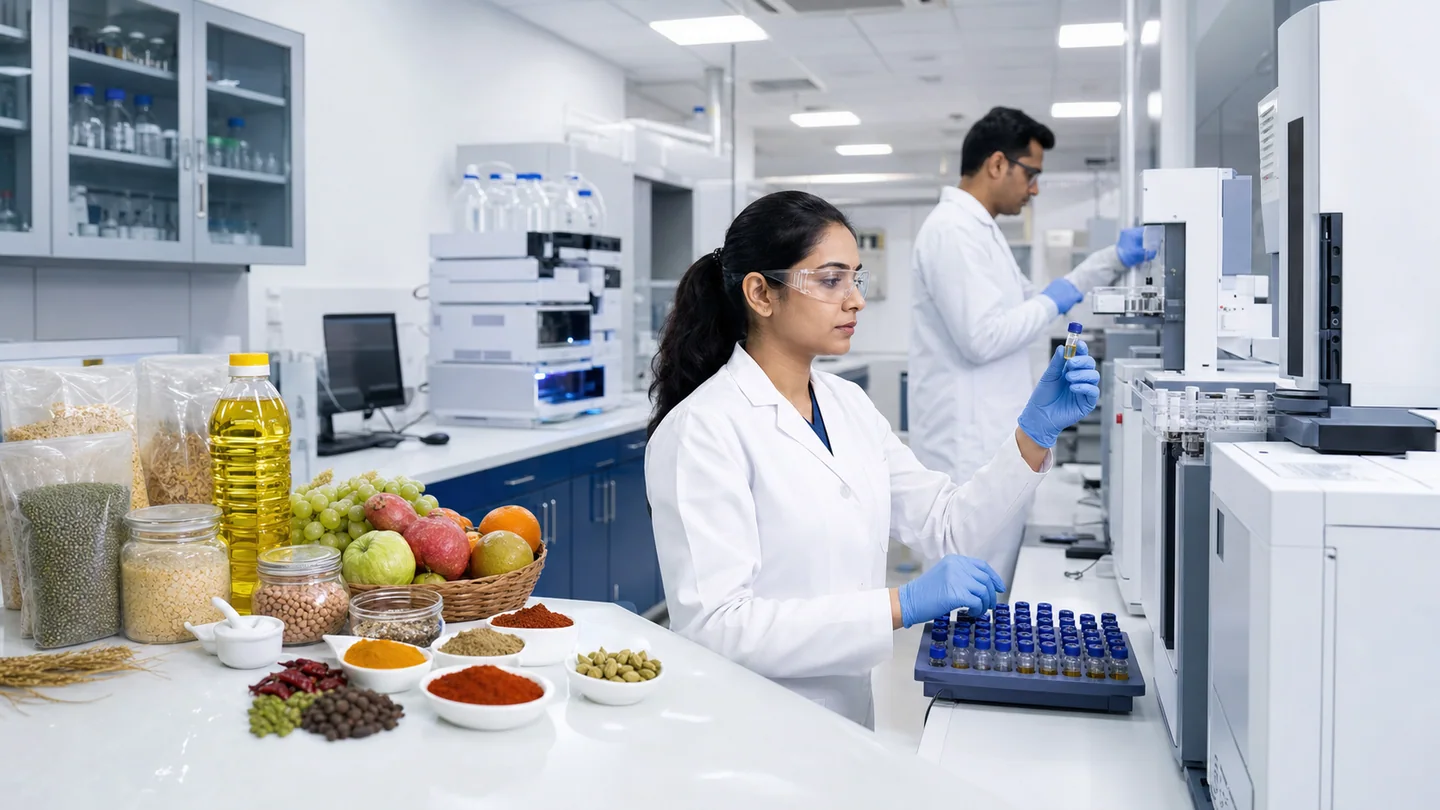
Testing & analysis
Food and Agricultural Product Testing
Choose testing for the decision you need to make
Whether you are reviewing an incoming ingredient, developing a label, investigating a complaint or planning batch-release checks, start with the food and the question. A dairy product, dry spice and ready-to-eat meal need different evidence.
Chem-Tech Laboratories coordinates food and agricultural testing from Pune for customers across India. The team reviews the product, target market and reporting requirement before agreeing the scope.
Find the right analytical service
Nutritional analysis
Composition and nutrient data for formulation and label review.
Learn more →Food microbiology
Organisms and indicators selected for the product and process.
Learn more →Shelf-life studies
Changes over an agreed storage period and study plan.
Learn more →Adulteration and authenticity
Focused investigation of suspected substitution or dilution.
Learn more →Metals and pesticide residues
Target analytes, reporting limits and market-specific requirements.
Learn more →Food-processing water
Water used as an ingredient, for washing or on food-contact surfaces.
Learn more →How to begin
Describe the food
Provide the product, ingredients, process, packaging, batch and storage information.
State the question
Identify the quality, nutrition, hygiene, shelf-life, authenticity or contaminant concern.
Agree the plan
Confirm parameters, methods, sample units, transport, reporting basis and quotation.
Use the evidence
Review the report against the agreed requirement and the sample or lot represented.
Testing, facility audits and team training
Laboratory testing examines the submitted sample. A hygiene audit reviews selected facility practices and records; training builds practical skills for the people managing those controls. Choose the route that matches the work you need.
Verify scope before submitting a sample
NABL accreditation applies to the specified material, parameter, method and laboratory location in the current scope. Additional work or partner-laboratory services must be identified separately in the quotation. A report does not itself confer FSSAI approval or certify an entire food business.
Review the published evidence
Examples from the published food laboratory scope
Selected entries from the published TC-15482 scope connect a material, parameter and method. Review the full document and confirm the applicable facility and current scope for your sample before quotation.
| Material | Parameter | Method as printed | Source entry |
|---|---|---|---|
| Wheat, Daliya, Wheat Powder | Protein | FSSAI 03.017 | Page 59, entry 698 |
| Vegetables & Vegetable Products | Aerobic Plate Count | IS 5402 | Page 8, entry 85 |
| Liquid milk forms listed in scope entry | Total Protein | IS 7219 | Page 41, entry 483 |
A method reference is not a product limit or regulatory approval. These are scope excerpts, not laboratory results or a sample test report.
Plan your requirement
Choose a route for your food business
Use the decision you need to make to select the starting service. Product testing, a facility assessment and staff learning produce different evidence.
| Situation | Question to define | Information to agree |
|---|---|---|
| Release or investigate a food lot | Product and analytical service | Identify the food, lot and quality or safety question; agree the sample plan and parameters. |
| Review kitchen or supplier controls | Hygiene assessment | Define the site, activities and evidence to review; agree any sampling separately. |
| Improve day-to-day practices | Workplace training | Identify staff roles and recurring observations; agree learning activities and follow-up. |
Include in your enquiry
- Send the food identity, intended market and decision required, with the specification or label.
- Ask for the material, parameter, method, performing laboratory and accredited coverage to be identified in the quotation.
Product specifications
Food category testing directory
Choose the product you need to test. Each page explains its sample context, analytical considerations and related testing services.
Dairy and frozen desserts
Bakery and prepared foods
Grains, produce and spices
Meat, seafood and eggs
Beverages, coffee and tea
Oils, sweeteners and other foods
Explore the evidence
Related testing and practical guidance
Relevant analytical services
Technical reading
Product-specific pathways
Discuss your requirement
Plan your food-testing requirement
Share the product or facility, intended market and the decision you need to make. Our team will review the requirement and confirm the scope.