Understand diesel analysis for fuel quality by combining physical properties, contamination evidence, specification context, representative sampling and operating history.
Plan diesel testing for generator sets and industrial equipment, covering delivered fuel, long-term storage, water, sediment, contamination, tank sampling and operating symptoms.
Plan grease analysis for industrial equipment including bearings, motors, gearboxes and heavy machinery using representative sampling, condition, contamination and wear evidence.
Understand grease contamination analysis for water, dirt, wear debris and mixed grease, including sampling, test selection, trend interpretation and industrial equipment context.
Plan oil analysis for industrial equipment including engines, gearboxes, hydraulic systems, turbines and compressors using condition, contamination, wear and trend evidence.
Understand the difference between oil testing and oil analysis, including fresh-oil quality checks, used-oil condition monitoring, contamination review and machine diagnostics.
Understand BOD, COD and total suspended solids testing using APHA Standard Methods and current IS 3025 references, sampling, preservation and trend interpretation.
Understand drinking-water testing to IS 10500 with relevant IS 3025 physical/chemical methods, microbiological standards, sampling and result interpretation.
Design a hygiene swab programme for hands, utensils, equipment and environmental sites with risk zoning, microbiological methods, trends and corrective action.
Plan food authenticity and adulteration investigations using product identity, targeted markers, FSSAI standards, sampling and weight-of-evidence interpretation.
Build a fruit and vegetable testing plan around FSSAI product methods, pesticide residues, contaminants, microbiology, processing and representative sampling.
Plan nutritional analysis for food labels using representative sampling, product-specific FSSAI methods, calculations, formulation controls and label review.
Understand pesticide residue testing for fruits and vegetables, from representative sampling and FSSAI MRL selection to validated GC/LC multi-residue analysis.
Validate RO and filtered water using feed/product comparisons, IS 10500 targets, IS/APHA methods, microbiology, treatment trends and maintenance evidence.
Build a spices and herbs testing plan around FSSAI methods, authenticity, pesticide residues, mycotoxins, metals, microbiology and representative sampling.
Plan food-business water monitoring using FSSAI Schedule 4, potable-water references, IS 10500, IS/APHA methods, point-of-use sampling and hygiene trends.
Edible-oil quality depends strongly on oxidation, rancidity, composition and contamination; a microbiology result alone cannot establish freshness or authenticity.
Shelf life for Indian foods can be limited by microbial growth, oxidation, moisture migration or other chemical and physical changes depending on the product and packaging.
Proximate analysis gives Indian food manufacturers a practical view of protein, fat, moisture, ash and calculated carbohydrate for product and label review.
Laboratory nutritional analysis helps Indian food businesses verify label values, formulations and batch consistency before relying on declared nutrition information.
Indian food businesses need chemical analysis alongside microbiological testing to assess composition, contaminants, nutrition, shelf life and product-specific safety risks.
Correct AdBlue sampling and storage practices help Indian fleets avoid contamination, misleading laboratory results and unnecessary SCR-system problems.
AdBlue / DEF quality for BS VI SCR systems should be assessed against the applicable ISO 22241 requirements, with representative sampling and contamination control.
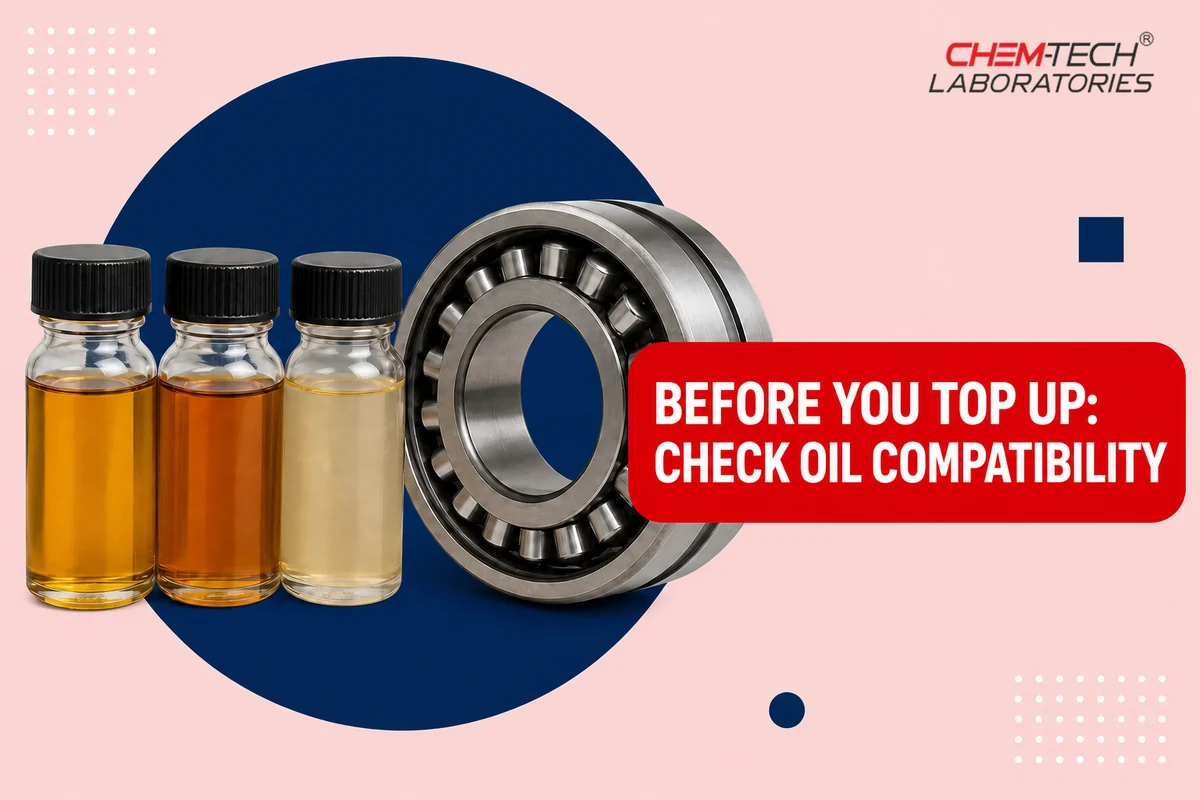
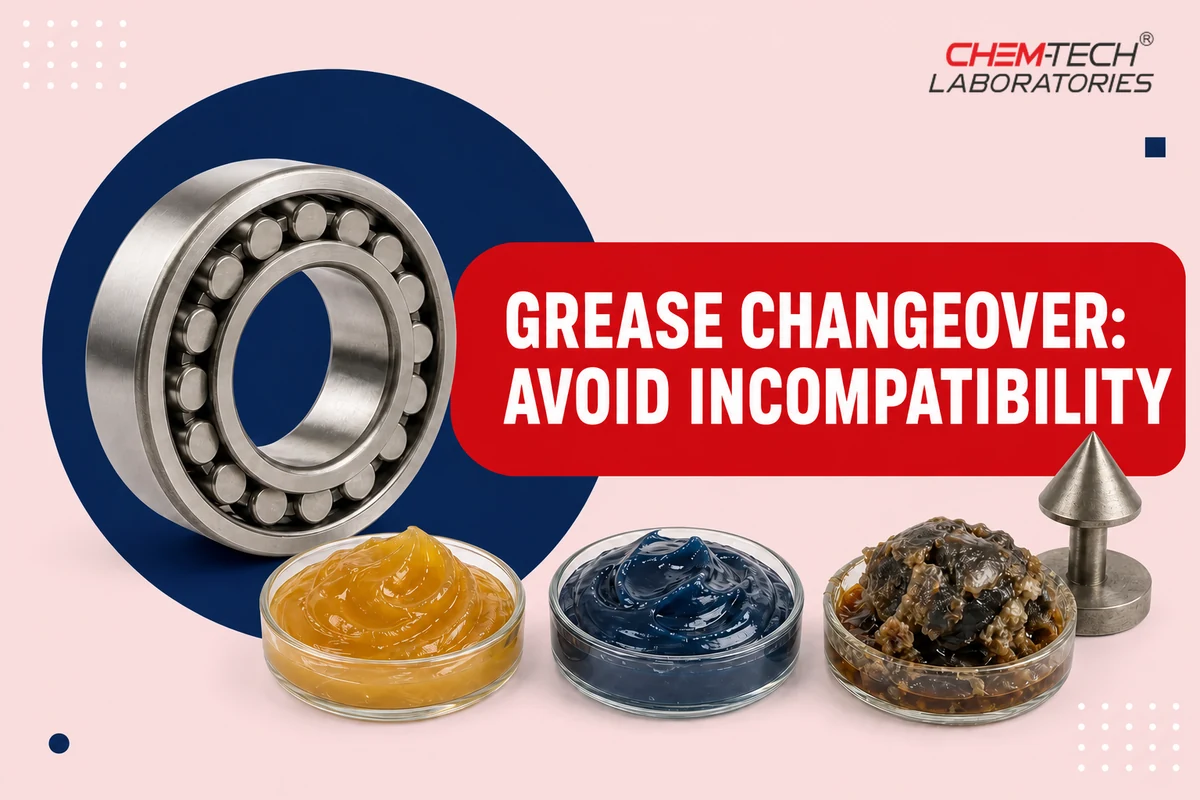
Mixing greases can alter consistency and performance. Indian maintenance teams should plan changeovers rather than assuming products with similar NLGI grades are compatible.
Grease dropping point is a useful laboratory property, but it is not the same as maximum operating temperature. Application conditions still govern grease selection.
Worked penetration and NLGI grade describe grease consistency, but Indian users should interpret them with the bearing, temperature, speed and application requirement.
Engine-oil contamination should be interpreted as a combined pattern of soot, coolant and fuel dilution, particularly for Indian DG sets, fleets and heavy equipment.
TAN and TBN serve different purposes in lubricant analysis. Their significance depends on the oil type, equipment and service conditions common to the application.
Understand FSSAI's 2026 liquor action on identical rum and whisky flavours, age claims, Maharashtra units, laboratory evidence and compliance response.
Used-oil viscosity can rise or fall for very different reasons. Indian maintenance teams should interpret the change with contamination, degradation and operating history.
Diesel quality and suspected adulteration require a pattern of evidence. One laboratory parameter should not be used as universal proof for Indian fuel investigations.
Biodiesel blends can respond differently to oxidation, moisture and storage. Indian users should align testing with the actual blend, storage period and applicable specification.
A structured approach for Indian industrial users investigating whether diesel contamination originated in a delivery, bulk tank, transfer system or dispensing point.
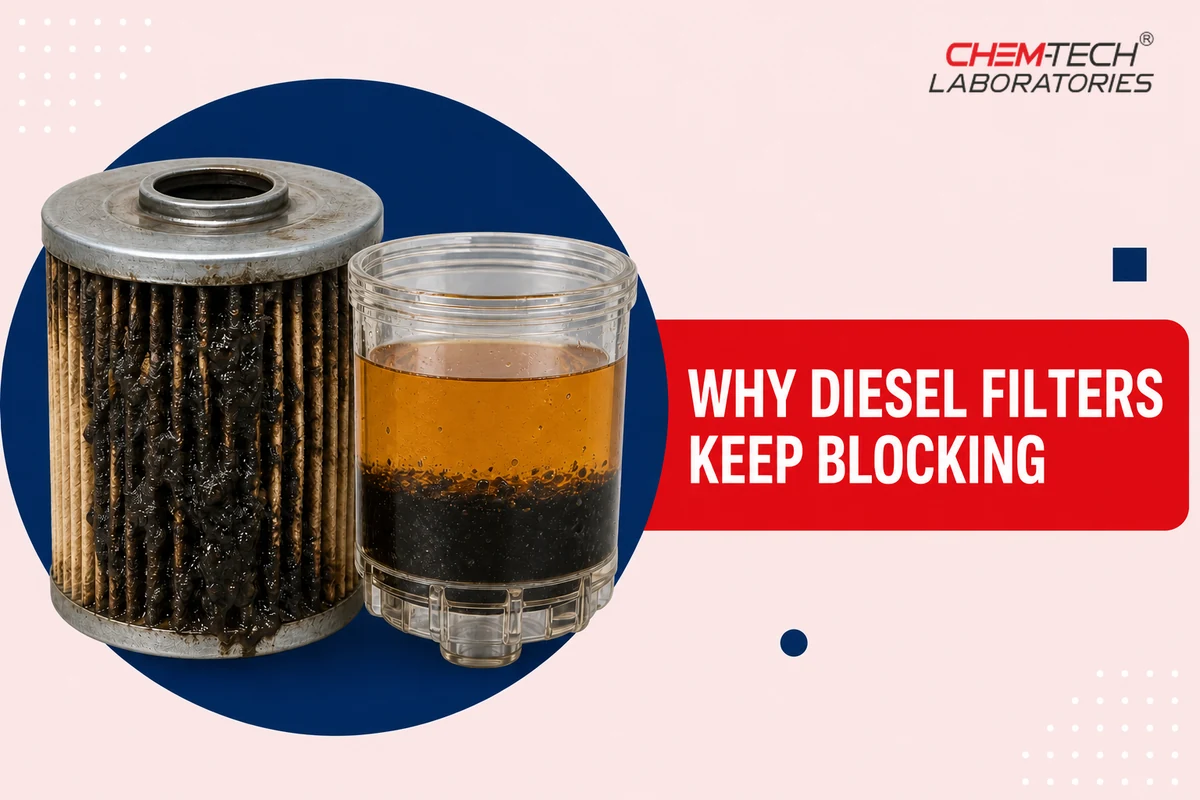
Stored diesel in India can be affected by water, sediment and microbial contamination, particularly in bulk tanks exposed to humidity, monsoon conditions and repeated fuel receipts.
Why Indian OCM programmes need equipment-specific baselines, trend logic and maintenance context instead of relying only on generic oil-analysis alarm limits.
Particle count and wear-metal analysis answer different questions. This guide explains how Indian hydraulic and industrial maintenance teams should use both.
How Indian maintenance teams can interpret wear-metal trends using rate of change, service hours, machine metallurgy and complementary oil-analysis evidence.
A practical guide for Indian mining, construction, power and manufacturing teams building an Oil Condition Monitoring programme around representative sampling, trends and maintenance action.
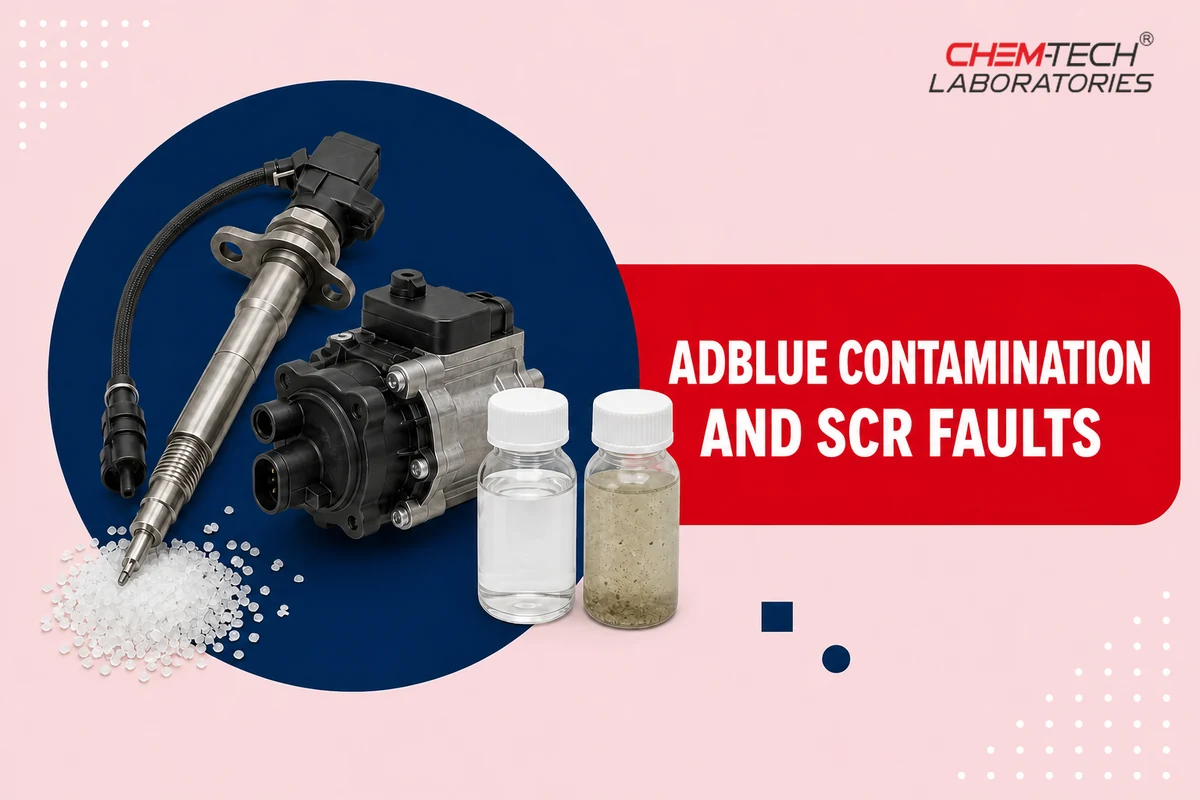
Trace recurring SCR faults through AdBlue supply, storage, transfer and equipment-tank samples without assuming every crystal deposit proves bad fluid.
Prevent grease changeover problems by evaluating real mixture ratios, planning the physical transition and preserving evidence when bearings show symptoms.
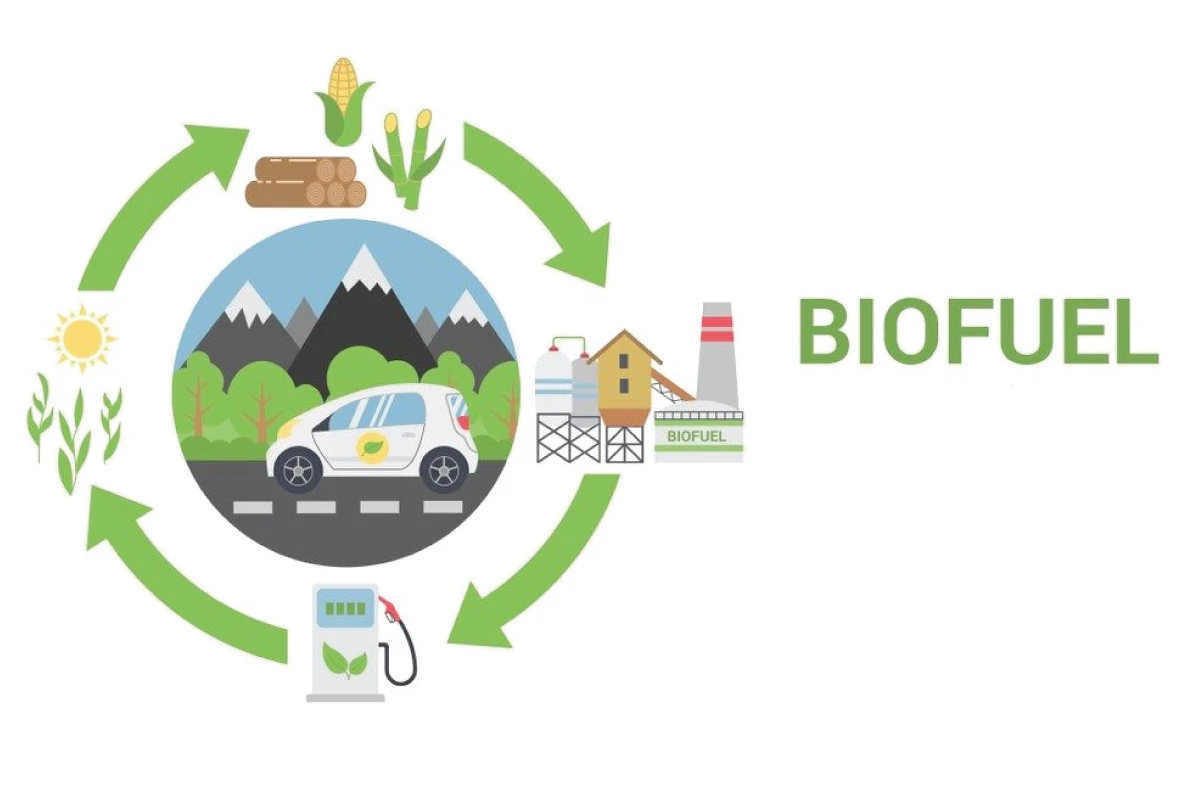
Chem-Tech Laboratories offer biofuel testing for a wide variety of industries. Biofuels are fuels that are derived or manufactured from biobased raw materials, MSW ( Municipal Solid Waste), Plastics, Rubber, Forestry residues, agricultural wastes, surplus food grains, etc.,
Fuel Dilution, or the fuel contamination in engine oil, is a serious issue. It is the process of mixing raw fuel or unburned fuel with oil. Fuel Dilution can lead to engine failure and other costly damages. It can also result in emission problems and a reduction in fuel efficiency, lack of lubrication, corrosion, etc. Chem-Tech Laboratories explains that detecting Fuel Dilution is important because it can helps to save money and avoid expensive repairs in the future.
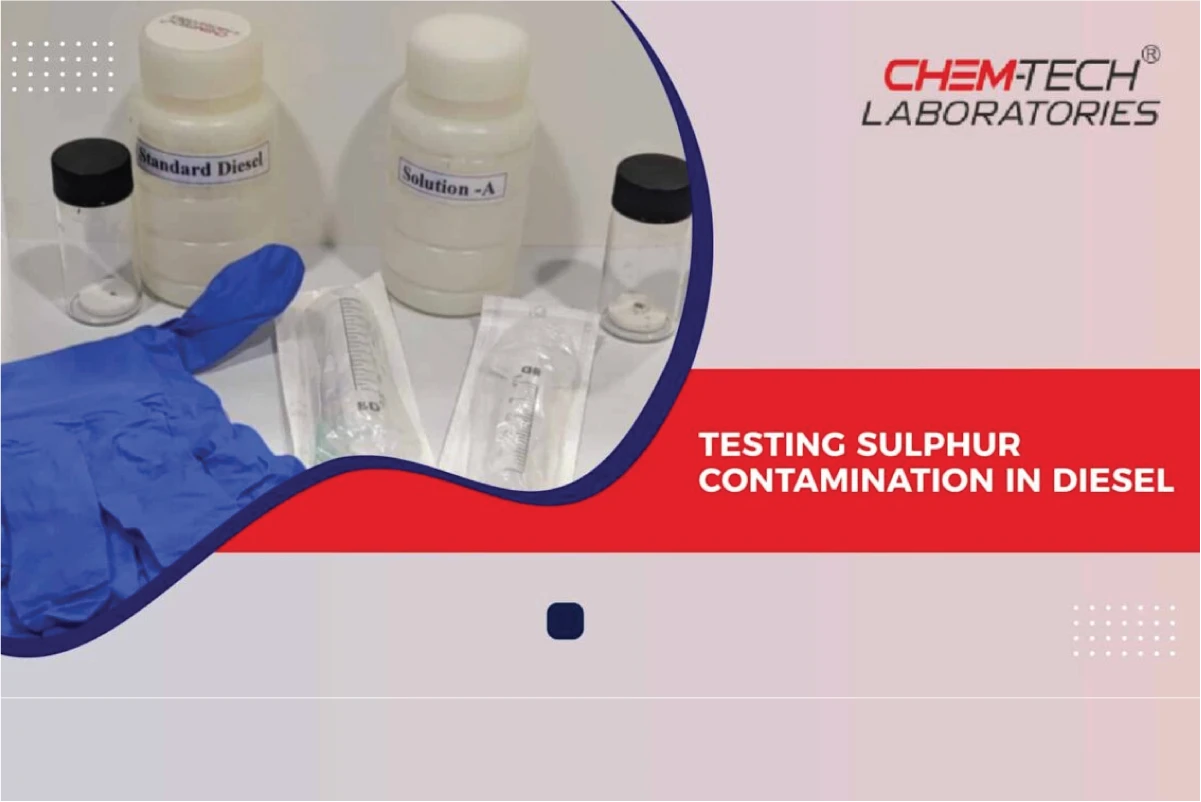
Dieselll is normally analysed in a laboratory for a variety of chemical and physical tests to monitor quality and compliance with various regulations. The introduction of the BS VI emission norms and a spike in fuel prices have forced the industry to look at alternative sources of cheaper fuel. The high demand has given rise to something we call at Chem-Tech Laboratories “Synthetic Diesel” or “Doctored Fuel”. As the name suggests synthetic or doctored is something that is manufactured in a not-so-normal way.
Lubricants are a crucial substance in any mechanical rotating machinery. They reduce the friction between two surfaces and allow the parts to rotate or move smoothly, reduce the heat and vibration, increase the machine’s efficiency, and extend its life. Without lubricants, the machine can eventually wear out and stop functioning. This is true for all machines. Hence, an effective program for lubricant monitoring and analysis is important. It ensures that the machine lubricants reinforce smooth functioning and act as a health check for lubricants used in a machine, giving timely information about any wear and tear.
Oil Degradation is one of the most important concerns for industries today. It is a complex process that occurs when oil reacts with oxygen, water, and other chemicals to produce toxic substances. Timely identifying the root cause can save from equipment failure, unplanned downtime, and significant costs, less component life-cycle, environmental damages.
Across the world, industries are always searching for ways to improve reliability of their plants and machinery. Hence, their Maintenance departments are closely monitoring two parameters – Mean Time between Failures (MTBF) and Advance Notice Before Failure (ANBF). Every maintenance team aims to increase the MTBF and ANBF as both impact the plant’s productivity and efficiency adversely.
Oil Analysis dates back to 1950’s when Physicochemical Tests & spectroscopic techniques were used to monitor the condition & life of the Equipment’s. Oil analysis has its roots in the United States of America, where it was first used to monitor the condition of the locomotives.
RoHS stands for Restriction of Hazardous Substances. It is a European Union Directive that prohibits the use of certain substances in electronic equipment for human and environmental protection from hazardous substances. RoHS compliance analysis is a process in which the product to be analyzed is checked for substances that are banned under the RoHS directive. Hazardous Chemicals That RoHS Directive Restricts To Certain Levels
Lubricants help to reduce friction between two surfaces. This reduces wear on the surface of an object and extends its life. Lubricants are also very important for certain machines because they help to keep them running smoothly without any interruptions . They are used in a variety of applications, including automotive engines, general machines, industrial machinery, and moving parts in general.
Fuel contamination can be devastating for a business and the environment. In most cases, it is a result of poor storage, transport, handling practices and more. The most common way to reduce fuel contamination is by taking precautionary measures such as ensuring that tanks are not overfilled and that all equipment used for fueling is properly maintained. However, it does not guarantee fresh and good-to-use fuel. You must choose fuel quality testing measures to ensure the fuel is ideal for use in your industry or customer supply.