
Overview
What is canteen hygiene audits?
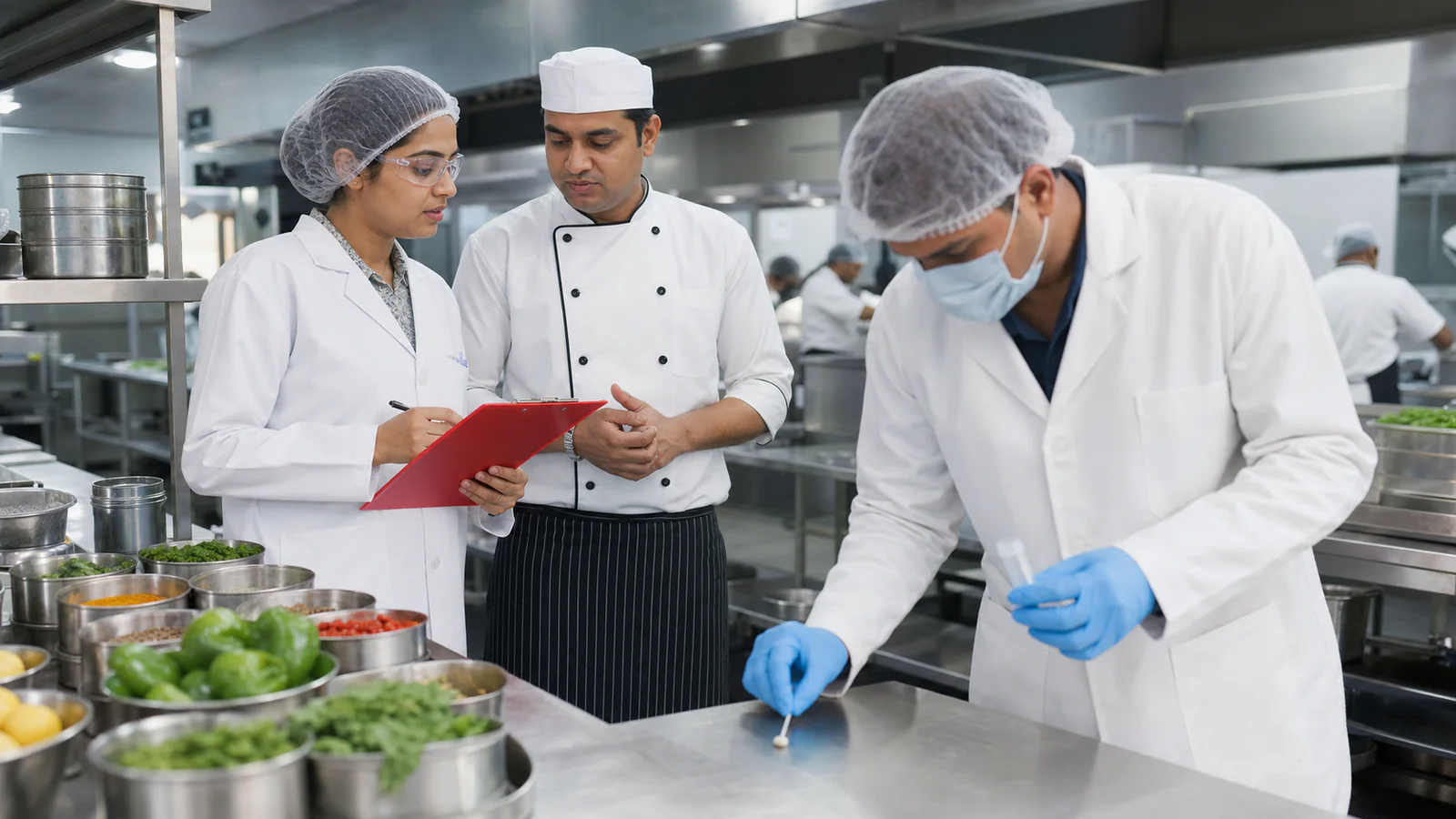
Institutional kitchens combine receiving, storage, preparation, cooking, holding, service, cleaning and waste handling within a time-sensitive operation. The audit is planned around the actual food flow, operating period, meal service and responsibilities rather than an empty or specially prepared kitchen.
Programme guidance
Audit coverage
Food flow
Receiving, storage, thawing, preparation, cooking, holding, service and leftover controls.
People and practices
Hand hygiene, protective practices, illness reporting, task separation and supervision.
Facility and utilities
Equipment condition, cleaning, water, ice, drainage, waste, pest and maintenance observations.
Records and actions
Available monitoring, supplier, cleaning, temperature, training, complaint and corrective-action records.
Programme guidance
Supporting verification
Where separately agreed, selected food, drinking or cooking water, hand, utensil or food-contact surface samples can support a defined hygiene question. Testing does not replace observation of operational controls.
Programme guidance
Plan a canteen audit
Share the institution type, number of meals, kitchen and service locations, operating schedule, outsourced-vendor arrangement and reason for the audit. The checklist and any sampling scope will be confirmed before the visit.
Request a canteen-audit quotationTechnical review
Common food-quality and testing considerations
Sample matrix and preparation
Method selection and preparation depend on the identified food, ingredient or agricultural-product matrix.
Composition and product variability
Results are reviewed with the product formulation, lot information and the purpose of the analysis.
Microbiological and handling context
Sampling, transport and storage conditions are important where microbiological quality forms part of the agreed scope.
Applicable requirement
Interpretation requires the correct product category, customer specification or applicable requirement to be identified before testing.
Before dispatch
Sample-submission guidance
- Use a clean, secure and appropriately labelled container.
- Provide the sample identity, fluid grade and equipment or system details where applicable.
- Share operating hours, maintenance history, the suspected problem and required specification where available.
- Contact Chem-Tech before dispatch so the laboratory can confirm the sample quantity, container and selected testing scope.
Technical output
Reporting and interpretation
The report records results and methods for the agreed scope. Customer-supplied limits or specifications can be considered when provided before testing.
Results should be reviewed with equipment history, operating conditions and previous data; a laboratory result alone does not guarantee a root-cause diagnosis or remaining service life.
Discuss your requirement
Need more information?
Share the product, sample matrix and testing objective with the Chem-Tech team.