
Overview
What is ocm private label programs for oems?
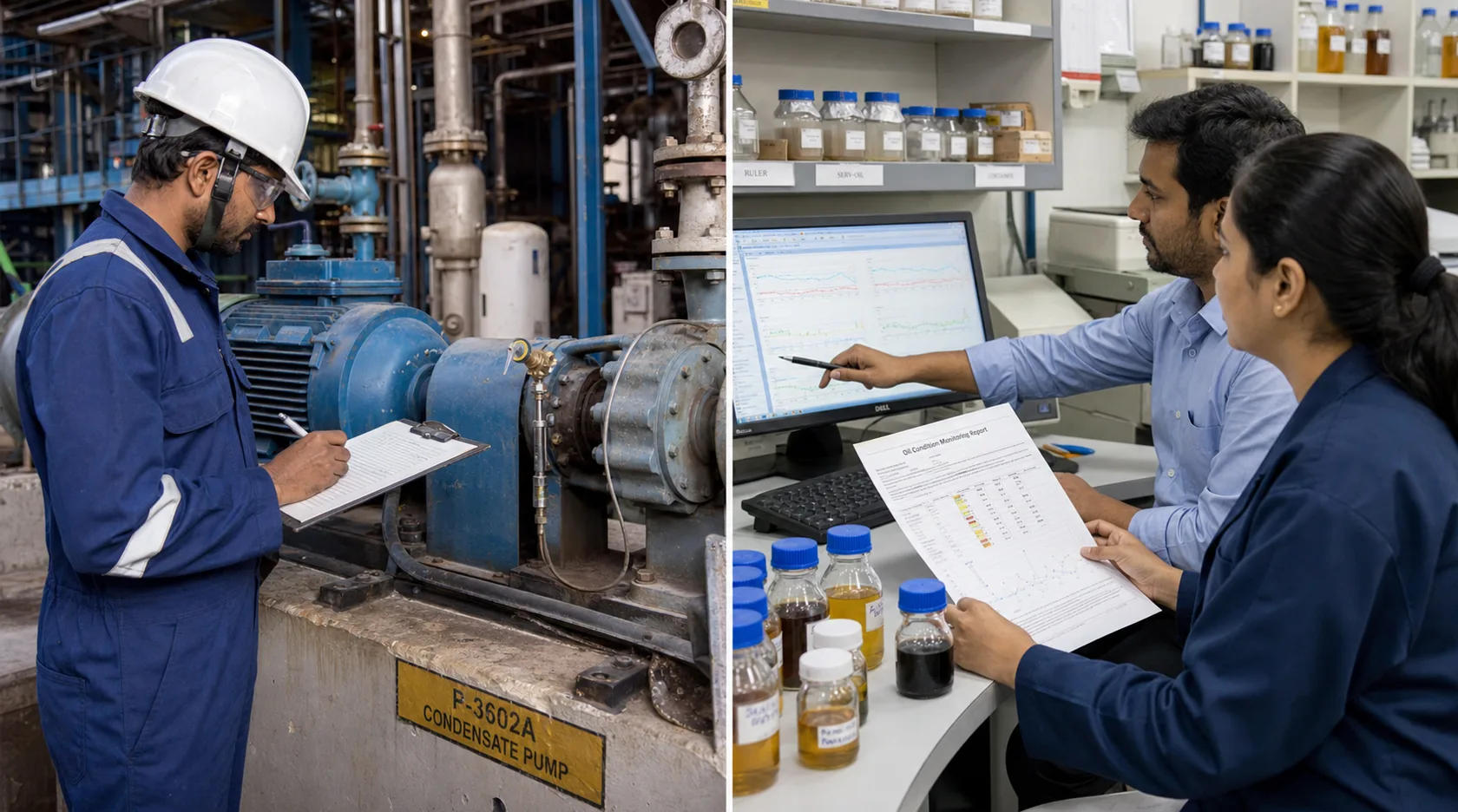
A private-label Oil Condition Monitoring program allows an OEM, lubricant company, dealer network or machinery-service organisation to offer structured oil analysis under its own customer proposition while Chem-Tech manages the agreed laboratory and digital workflow behind the service.
The programme is designed around the partner's equipment population, lubricant portfolio, dealer structure, customer journey and technical responsibilities. It can support a fully private-label presentation or an agreed co-branded model. The exact brand, scope, methods, limits, turnaround and support responsibilities are documented before launch.
Programme guidance
Who the program is designed for
Lubricant manufacturers
Add an oil-analysis service to product support, customer retention, field trials or lubricant-performance programmes.
Machine and equipment OEMs
Connect laboratory evidence with engines, hydraulics, transmissions, gearboxes and other critical assets in the installed base.
Dealers and service networks
Standardise sample submission, customer communication and technical escalation across multiple branches or territories.
Fleet and reliability providers
Operate a repeatable monitoring programme across customers, sites, equipment groups and service teams.
Programme guidance
An end-to-end managed workflow
Programme design
Define equipment types, sample points, test packages, frequency, limits, interpretation logic and escalation routes.
Onboarding and sampling
Prepare partner-specific sample information, asset hierarchy, submission workflow, labels and sampling guidance.
Laboratory execution
Receive, identify, test, quality-review and technically validate samples within the agreed programme controls.
Digital delivery
Manage registration, sample status, reports, trend history, comments and multi-level access through the configured online portal.
- Partner, dealer, customer, site, fleet and equipment hierarchy
- Configured test packages by machine, component, lubricant or service interval
- Branded sample-submission and report-delivery workflow
- Exception flags, technical comments and agreed escalation paths
- Historical results and equipment-level trend visibility
- Role-based access for programme managers, dealers, technicians and customers
Programme guidance
Private-label digital experience
Chem-Tech's Zylon LIMS environment supports the end-to-end programme workflow. The partner configuration can include branded programme entry points, organisation and user roles, equipment master data, online sample submission, status tracking, report access, trend review and technical communication. Available functions are confirmed for the selected implementation.
| Programme user | Typical digital requirement |
|---|---|
| OEM or lubricant programme manager | Portfolio visibility, programme performance, exceptions, customers and dealer access |
| Dealer or service branch | Customer and equipment registration, sample submission, status and report follow-up |
| Technician | Correct asset identification, sampling information and access to assigned results |
| Customer or asset owner | Reports, trends, comments and visibility limited to authorised equipment |
Programme guidance
Governance protects the partner and the customer
A scalable programme needs defined ownership. Before launch, Chem-Tech and the partner agree who approves the test scope, equipment limits, report wording, critical notifications, customer communication, user access and changes to the programme. Laboratory results remain tied to the tested sample and method; maintenance decisions remain with the authorised equipment owner and its technical team.
- Approved brand, report template and customer-facing terminology
- Defined laboratory methods, packages and any customer-specific instructions
- Alert, interpretation and technical-escalation responsibilities
- User roles, data visibility, retention and authorised exports
- Service review metrics, exception handling and controlled change management
- Pilot acceptance criteria before network-wide rollout
Programme guidance
How a private-label programme is launched
Discover
Map the partner's commercial objective, customer journey, assets, regions and existing oil-analysis process.
Design
Build the service catalogue, sample model, test packages, reports, digital roles and governance.
Pilot
Run a controlled population of samples and users to verify data, logistics, interpretation and customer experience.
Scale
Roll out by dealer, customer, equipment group or geography with training, review and controlled updates.
Programme guidance
Prepare for a programme discussion
Share the partner type, intended customers, equipment population, expected monthly sample volume, regions, current test packages, report format and required portal roles. Chem-Tech will review the operating model and identify the laboratory, digital and implementation scope that needs to be agreed.
Discuss an OCM private-label programPublished laboratory capability
Tests and test methods
The methods below are matched to Chem-Tech's controlled technical test lists and published laboratory capability. The final scope is confirmed for the sample, specification and current laboratory capability.
| Test / parameter | Published test method | Technical purpose | Interpretation / high-low context |
|---|---|---|---|
| Appearance | CTP T 112 | Records the visible condition and colour of the submitted sample. | Unexpected haze, sediment, separation or colour change may indicate contamination, degradation or sample-handling effects; compare with the product reference. |
| Density / Specific Gravity | ASTM D1298 / ASTM D4052 | Measures mass per unit volume and supports product identification or specification review. | A result above or below the applicable range may indicate product mixing, contamination, composition change or an incorrect grade. |
| Kinematic Viscosity | ASTM D445 / ASTM D7042 | Characterises resistance to flow and, where applicable, viscosity response to temperature. | Higher viscosity may accompany oxidation, soot or heavier-product contamination; lower viscosity may accompany dilution, shear or lighter-product mixing. |
| Viscosity Index | ASTM D2270 | Characterises resistance to flow and, where applicable, viscosity response to temperature. | Higher viscosity may accompany oxidation, soot or heavier-product contamination; lower viscosity may accompany dilution, shear or lighter-product mixing. |
| Water Content | ASTM E203 / ASTM D1744 / ASTM D6304 | Quantifies water or moisture in the submitted material. | A higher result may indicate ingress, condensation, storage or handling contamination; significance depends on the product and applicable limit. |
| Flash & Fire Point (COC) | ASTM D92 | Determines the temperature at which vapour ignites under the selected procedure. | A lower result may indicate volatile contamination or product change; a higher result is interpreted against the identified grade and method. |
| Total Base Number | ASTM D4739 / ASTM D2896 | Measures reserve alkalinity in applicable lubricants. | A lower result relative to fresh oil or trend data may indicate reserve depletion; an unexpectedly high value may indicate a different formulation or mixing. |
| Total Acid Number | ASTM D664 / ASTM D974 | Measures acidic constituents under the selected method. | An increase from the reference may support oxidation or acidic-contamination review; a single result must be compared with product and service history. |
| Elemental Analysis by ICP | ASTM D5185 / ASTM D4951 | Reports selected wear, contaminant, additive or composition-related elements. | Higher or lower values require comparison with formulation, metallurgy, process inputs and trend history; one result alone does not establish the source. |
| Particle Count / Cleanliness | NAS 1638 / ISO 4406 | Assesses particulate, sediment or insoluble contamination in the sample. | A higher result indicates more suspended or insoluble material; acceptability depends on the equipment, product specification and sampling point. |
| Foaming Tendency & Stability | ASTM D892 | Assesses foam tendency and, where applicable, foam stability. | Higher foam volume or persistence may indicate poorer air-release behaviour, contamination or additive-related change under the test conditions. |
| Water Separability | ASTM D1401 | Assesses separation behaviour between oil and water. | Longer separation time or persistent emulsion may indicate reduced water-separation performance; compare with the applicable product requirement. |
| Soot Content | ASTM D7686 | Measures combustion-derived soot in used engine oil. | A higher result indicates greater soot loading and should be reviewed with engine condition, oil hours and viscosity change. |
| Fuel Dilution | ASTM D7593 | Assesses fuel contamination in used engine oil. | A higher result indicates more fuel in the lubricant and may be associated with viscosity reduction; operating information is needed for diagnosis. |
| PQ Index | ASTM D8184 | Measures or evaluates pq index under the published method. | A higher or lower result is interpreted against the applicable specification, sample type and available reference data; direction alone does not establish conformity. |
| FTIR Condition Monitoring | ASTM E2412 | Assesses oxidation stability or condition-related spectral indicators. | Greater oxidation-related change may indicate degradation; stability results and spectral trends must be interpreted using the applicable method and reference. |
| Pour Point | ASTM D97 | Assesses low-temperature flow or operability characteristics. | A higher temperature generally indicates poorer low-temperature behaviour; compare with the climatic and product requirement. |
| Sulphur Content | ASTM D4294 | Quantifies sulphur in the submitted fuel or material. | A higher result may affect specification compliance, emissions-related requirements or process suitability; compare with the identified grade. |
| Ash Content | ASTM D482 | Measures non-combustible residue remaining after controlled combustion. | A higher result indicates more inorganic residue and may affect fuel quality, deposits or specification compliance. |
| Conradson Carbon Residue | ASTM D189 | Assesses the tendency to leave carbonaceous residue under the selected procedure. | A higher result indicates greater residue-forming tendency; relevance depends on the fuel grade and application. |
| Insolubles | ASTM D893 | Assesses particulate, sediment or insoluble contamination in the sample. | A higher result indicates more suspended or insoluble material; acceptability depends on the equipment, product specification and sampling point. |
| Saponification Value | ASTM D94 | Measures or evaluates saponification value under the published method. | A higher or lower result is interpreted against the applicable specification, sample type and available reference data; direction alone does not establish conformity. |
| Analytical Ferrography | ASTM D7690 | Measures or evaluates analytical ferrography under the published method. | A higher or lower result is interpreted against the applicable specification, sample type and available reference data; direction alone does not establish conformity. |
| Cooling Curve Analysis | ASTM D6200 | Measures or evaluates cooling curve analysis under the published method. | A higher or lower result is interpreted against the applicable specification, sample type and available reference data; direction alone does not establish conformity. |
| Distillation Recovery / Initial Boiling Point | ASTM D86 | Characterises volatility and recovery across the boiling range. | Higher or lower recovery temperatures may indicate composition change, contamination or a different product grade when compared with the applicable specification. |
Before dispatch
Sample-submission guidance
- Use a clean, secure and appropriately labelled container.
- Provide the sample identity, fluid grade and equipment or system details where applicable.
- Share operating hours, maintenance history, the suspected problem and required specification where available.
- Contact Chem-Tech before dispatch so the laboratory can confirm the sample quantity, container and selected testing scope.
Technical output
Reporting and interpretation
The report records results and methods for the agreed scope. Customer-supplied limits or specifications can be considered when provided before testing.
Results should be reviewed with equipment history, operating conditions and previous data; a laboratory result alone does not guarantee a root-cause diagnosis or remaining service life.
Discuss your requirement
Need more information?
Share the lubricant type, equipment and testing objective with the Chem-Tech team.