Technical perspective
A turbine may continue to run while degradation products are accumulating in the oil. The first operational clue is often not a dramatic change in a routine result, but an intermittent servo-valve response, a shorter filter life, dark deposits on cooler surfaces or repeated complaints after an oil-temperature change. Treating each symptom separately can delay the real investigation.
The maintenance question is therefore not simply whether the oil is still within a single limit. It is whether the oil, the degradation products and the system surfaces are moving toward a deposit-forming condition.
Investigation guidance
Why a routine oil result may not tell the whole story
Varnish-related material can be dissolved, suspended or deposited. Temperature and operating conditions influence where that material resides. A sample collected at one moment may look clear even though deposits are developing elsewhere in the circuit. This is why a meaningful review uses several indicators and the equipment history rather than one isolated number.
- Record valve-response complaints, filter changes, oil temperature and recent top-ups.
- Compare current results with the same sampling point and previous operating trend.
- Inspect filters, reservoirs and cooler surfaces for colour, deposits or insoluble material.
- Retain a representative sample before filtration, flushing or oil replacement changes the evidence.
Investigation guidance
Build a varnish investigation around the failure mode
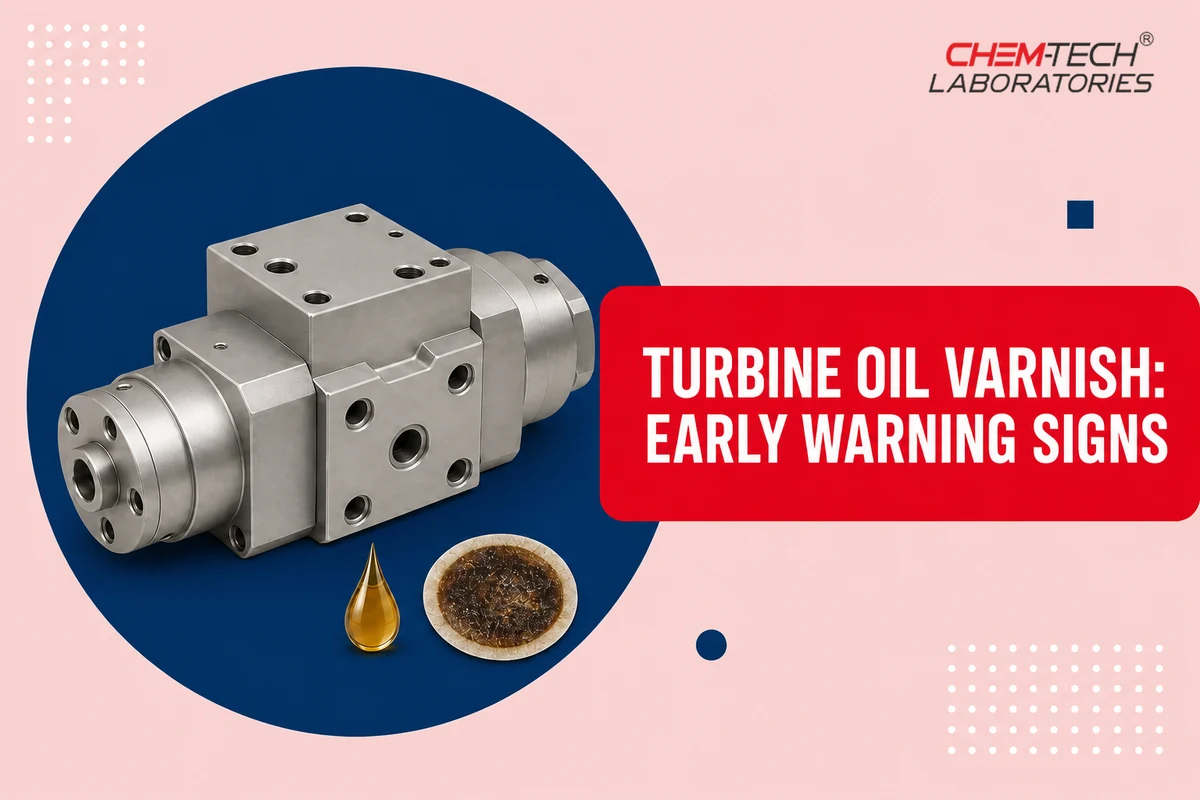
ASTM D7843 addresses lubricant-generated insoluble colour bodies in in-service turbine oils using membrane patch colorimetry. It can add useful evidence when the concern is deposit tendency, but it should be reviewed with oil condition, contamination, operating history and the exact turbine-oil application. Related monitoring practices may call for other physical, chemical or performance checks.
Start with the symptom. If servo valves are sticking, record when the behaviour occurs and whether temperature changes affect it. If filters are blocking, examine the retained material rather than assuming every dark deposit is varnish. If the oil has recently been topped up, investigate compatibility as a separate cause of precipitate or deposit formation.
Investigation guidance
What to send with the sample
- Oil brand, grade and time in service.
- Equipment identity, operating temperature and sampling location.
- Dates and quantities of top-ups, purification or filter changes.
- A description of valve, filter, bearing or deposit symptoms.
- Previous reports from the same sampling point, where available.
The required sample quantity and test scope depend on the investigation. Contact the laboratory before dispatch so enough representative material is collected for the agreed work.
Investigation guidance
Turn results into a controlled maintenance decision
A result should lead to a decision tree: continue trending, inspect a component, confirm oil compatibility, improve contamination control, purify the charge or plan a controlled oil change. Avoid selecting a corrective action from patch colour alone. The most defensible decision combines laboratory evidence with temperature history, component inspection and repeatable samples.
Apply this guidance