Food News · Food safety, audits and training
AdvisoryFSSAI cold-chain advisory: make temperature records audit-ready
FSSAI’s October advisory reinforces temperature control for perishables. Review transport hygiene, traceability, testing plans and staff training.
- Source published
- Source reviewed
- Brief published
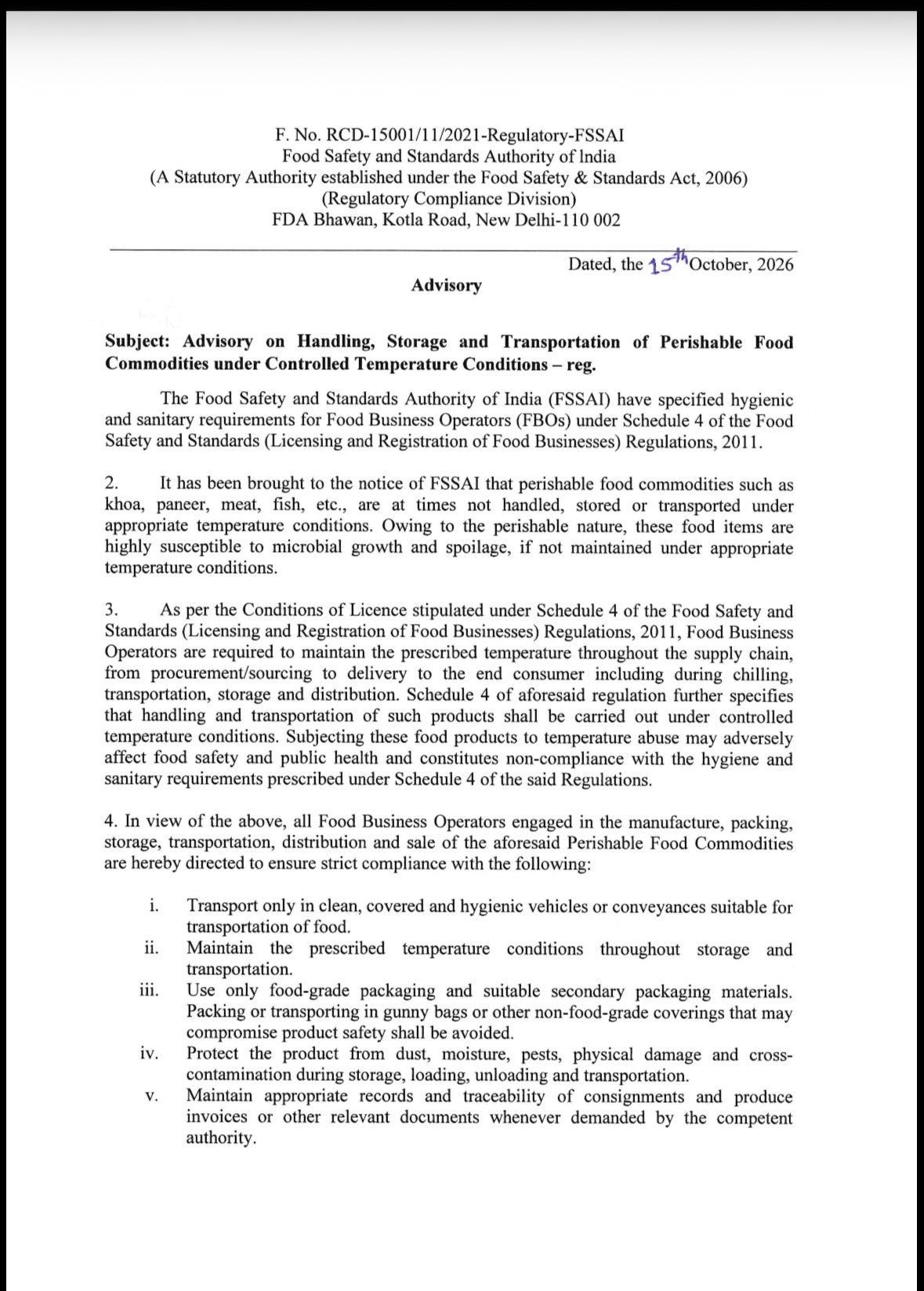
FSSAI has reiterated that perishable foods such as khoa, paneer, meat and fish need controlled-temperature handling, storage and transport throughout the supply chain. Its advisory is dated 15 October 2026 and was shared by the authority on 18 October. The document cites the existing hygiene and sanitary requirements in Schedule 4 of the Food Safety and Standards (Licensing and Registration of Food Businesses) Regulations, 2011. [1, 2]
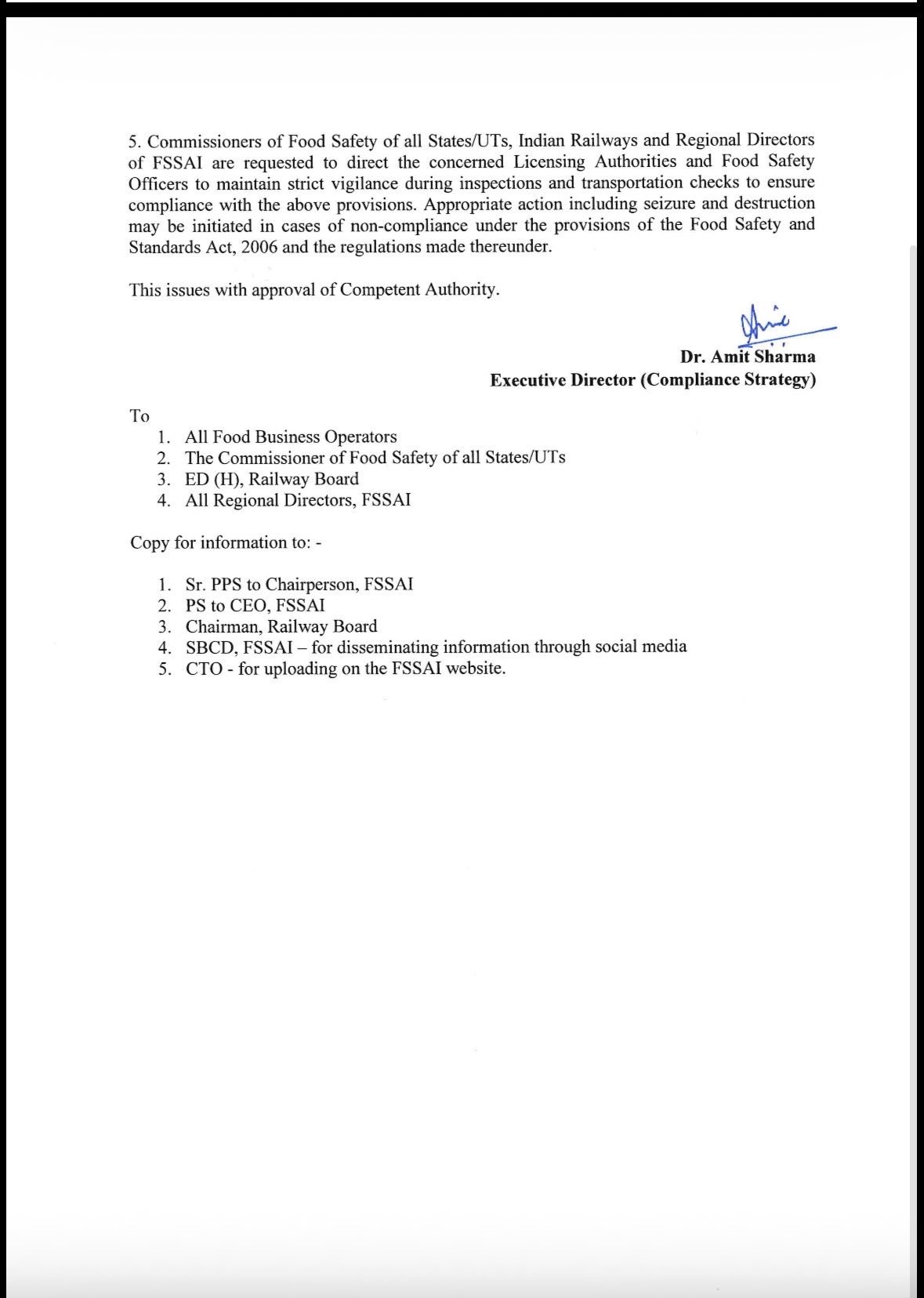
The advisory calls for suitable hygienic vehicles, food-grade packaging, protection against contamination and records that make consignments traceable. It also asks enforcement authorities to check compliance during inspections and transportation checks. [2]
For quality and operations teams, this is a useful moment to review what happens between dispatch and receipt, including loading, unloading and temporary storage.
Practical checks for the next shipment
- Temperature controls: Confirm the applicable conditions for each product and activity. Put the relevant limits, monitoring method and escalation contact into dispatch and receiving instructions. The advisory does not give one numerical limit for all the foods it names.
- Audit evidence: Connect temperature records, delivery times, vehicle checks and packaging checks to the consignment and its batch details. Check that staff can retrieve the supplier invoice and explain any gap or deviation.
- Testing: Review any microbiological testing plan with a competent laboratory against the actual product, purpose and applicable criteria. Agree sample handling and transport before collection, and assess results alongside the process and temperature records. Confirm the laboratory’s current scope before commissioning work.
- Training: Use a fictional delivery with a missing temperature record or damaged covering. Ask staff who places the consignment on hold, who investigates and who authorises its disposition. Practise the response at both dispatch and receipt.
These practical steps are editorial recommendations. The advisory itself does not specify a new testing panel or frequency. Businesses should check the requirements that apply to their products and activities when updating their procedures. No claim is made here about Chem-Tech’s specific testing scope or accreditation.
Sources
[1] FSSAI, official X announcement, 18 October 2026, 12:57 pm IST. Author handle and timestamp verified through public embed/syndication data.
https://x.com/fssaiindia/status/2111720842153627983
[2] FSSAI Regulatory Compliance Division, F. No. RCD-15001/11/2021-Regulatory-FSSAI, “Advisory on Handling, Storage and Transportation of Perishable Food Commodities under Controlled Temperature Conditions,” dated 15 October 2026. Both signed pages were visually read from Delhi News Live’s reproduction published 18 October. The official post and original media references were verified, but the readable document copies were not downloaded from FSSAI’s website.
https://www.delhinewslive.com/national/fssai-tells-food-businesses-to-maintain-cold-chain-for-khoya-paneer-meat-and-fish/
Page 1: https://www.delhinewslive.com/wp-content/uploads/2026/10/FSSAI_COLD_CHAIN_NOTICE_P1_20261018.jpg
Page 2: https://www.delhinewslive.com/wp-content/uploads/2026/10/FSSAI_COLD_CHAIN_NOTICE_P2_20261018.jpg