Technical perspective
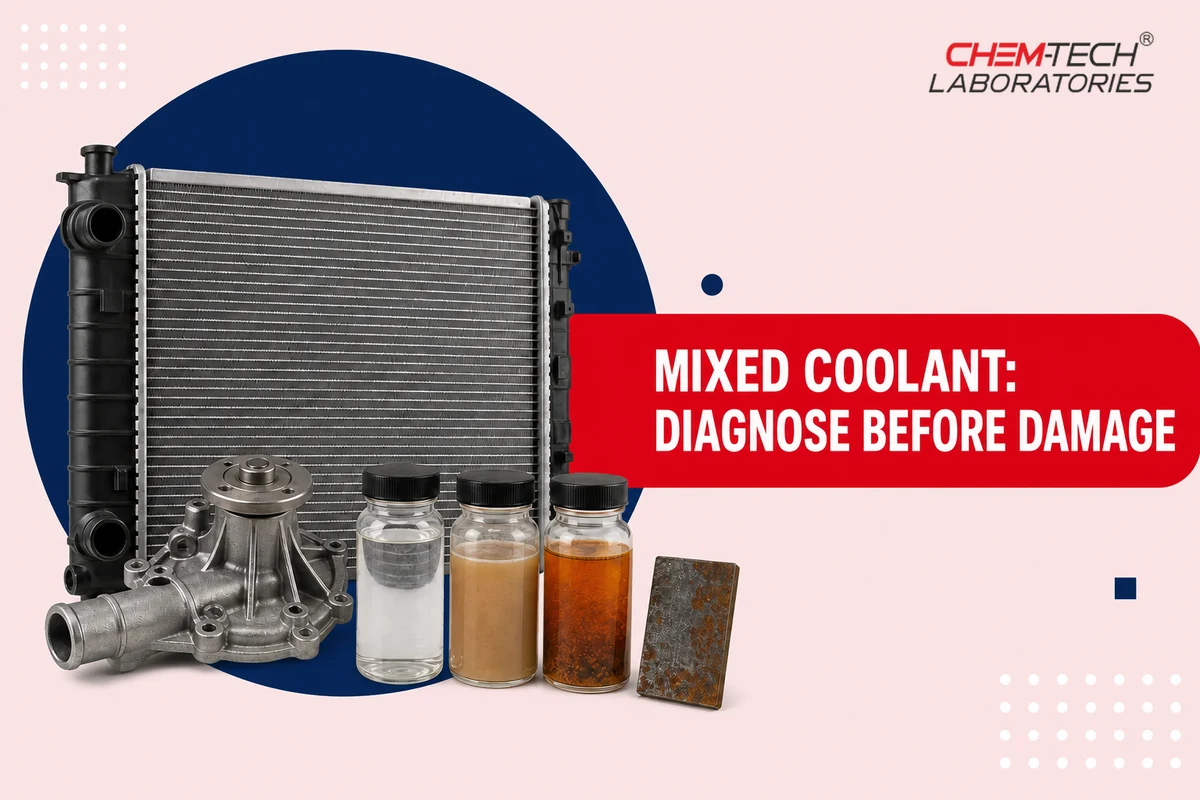
A workshop sees brown coolant, tops up with a familiar colour and later faces scale, seal complaints or overheating. The instinct is to blame the last product added. That may be correct, but colour alone cannot identify coolant chemistry, concentration, inhibitor condition or contamination.
Modern cooling systems combine several metals, elastomers and heat-rejecting surfaces. ASTM coolant standards address properties including freezing and boiling behaviour, corrosion and foaming. The right investigation therefore connects the fluid result with the actual system symptom.
Investigation guidance
Start by separating four common questions
- Was the correct coolant product used for the equipment?
- Was it diluted or topped up with unsuitable water?
- Were different formulations mixed?
- Is another fluid, corrosion product or combustion leakage contaminating the system?
Each question creates a different evidence path. A product-identity problem is not solved by a concentration reading alone. Rust-coloured fluid may require corrosion and contamination review. Oil in coolant or unexplained pressure requires an equipment investigation as well as a fluid check.
Investigation guidance
Collect evidence before flushing it away
Collect a representative coolant sample before draining, adding water, chemicals or stop-leak products. Record the equipment model, coolant product, previous top-ups, operating hours, temperature complaint and any visible deposits. If unused coolant remains from the container used for top-up, retain it separately as a reference.
- Do not mix reservoir, drain and fresh-product samples in one bottle.
- Photograph settled solids, staining and deposits before cleaning.
- Record whether the complaint is overheating, freezing protection, corrosion, foaming, leakage or short coolant life.
Investigation guidance
Choose tests that answer the failure question
Depending on the coolant type and concern, the agreed scope may examine physical condition, concentration-related properties, reserve alkalinity or pH, water quality, contamination and corrosion-related evidence. Performance or specification testing is different from a used-coolant troubleshooting screen, so the request should identify which decision must be made.
Do not compare a result with a generic limit when the equipment or coolant supplier specifies a different requirement. Report interpretation should use the declared product, service history and customer-supplied acceptance criteria.
Investigation guidance
Close the loop after corrective action
If a flush or product change is selected, document the procedure and verify the replacement coolant rather than assuming the system is clean. A follow-up sample can confirm whether contamination is recurring and whether the original symptom has been addressed.
Apply this guidance