Technical perspective
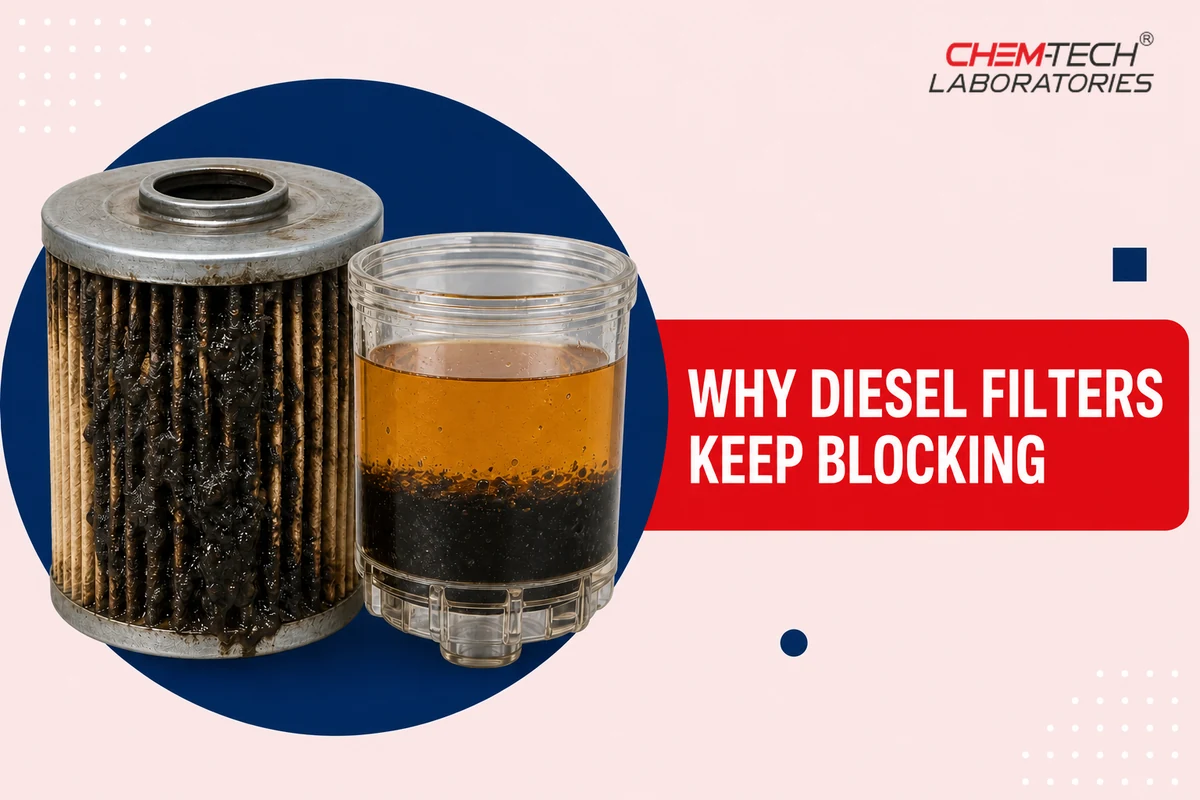
When a diesel filter blocks again soon after replacement, the filter is doing its job—but changing it does not remove the source. Fine rust, tank sediment, degraded fuel, incompatible blends and microbial contamination can create similar operational symptoms. A useful investigation must distinguish between them.
ASTM D6469 describes microbial contamination as a costly problem across fuel production, storage and use. Microorganisms require water, so the fuel-water interface and system water bottoms deserve particular attention even when the bulk fuel appears bright and clear.
Investigation guidance
Read the failure pattern before collecting samples
- Record which tank, dispenser, vehicle or generator is affected.
- Note the time between filter changes and whether the problem follows a delivery.
- Photograph and retain representative blocked-filter material where safe.
- Check for water, tank-breathing issues, poor drainage and low-turnover storage.
- Separate isolated equipment faults from site-wide fuel symptoms.
A site-wide pattern points toward storage or supply. One affected machine may point toward its day tank, transfer line or equipment-specific contamination. The sampling plan should follow that evidence.
Investigation guidance
Do not rely on a single top sample
ASTM D7464 emphasises representative sampling for microbiological assessment. A bulk-fuel sample taken far from the water bottom can miss the region where contamination is concentrated. Depending on the system and investigation, useful evidence may include bulk fuel, a low-point or bottom sample, associated water and retained filter debris.
Label every sample with the exact location, depth or valve, date, tank condition and recent maintenance. Avoid combining separate locations into one bottle; compositing can hide the source.
Investigation guidance
Match the tests to the question
The first question may be whether microorganisms are present. The second is whether fuel condition, water or particulates are contributing to the blockage. The third is where the contamination entered or grew. These questions may require different tests and samples.
- Microbiological evidence in fuel or associated water.
- Water and sediment at relevant system points.
- Fuel condition against the customer’s applicable specification.
- Filter-debris examination where it can help distinguish sludge, corrosion or external dirt.
Investigation guidance
Fix the system, then verify the recovery
Treatment without water management and housekeeping can allow the problem to return. Corrective action should be selected by the fuel-system owner using confirmed evidence, equipment requirements and appropriate safety controls. After action, repeat samples from the same defined points and trend filter performance.
Apply this guidance