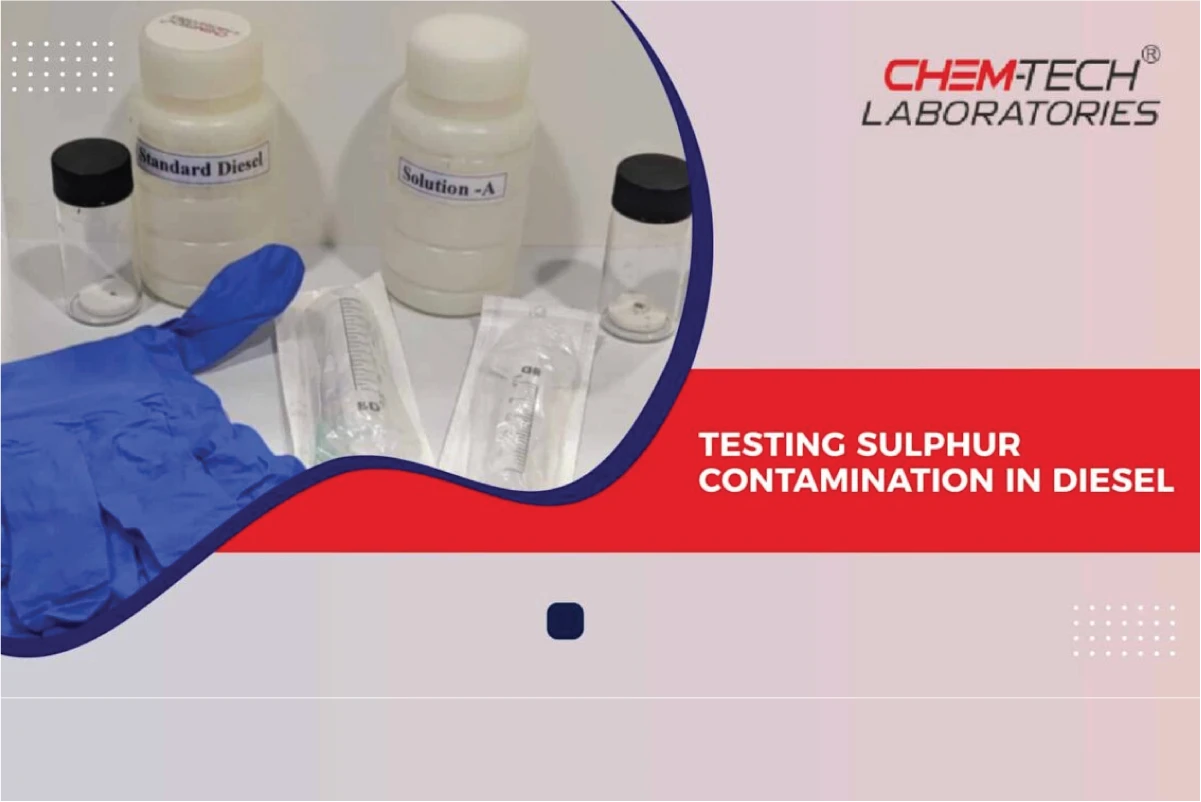

Technical perspective
Kerosene, light solvents, waste solvents and diesel can contain overlapping hydrocarbon families. When an adulterant has a similar boiling range, density or appearance, a small addition may not create an obvious visual change and may leave one or more routine properties within specification. This is why diesel-adulteration investigations need a parameter that can respond to the source and refining history of the added material, not only to bulk hydrocarbon similarity.
For Bharat Stage VI automotive diesel in India, the maximum permissible sulphur content is 10 mg/kg. That low specification creates a narrow compliance ceiling. If the genuine fuel has a stable low-sulphur baseline and an added petroleum-derived material contains materially more sulphur, total sulphur can shift early and provide a strong reason to investigate.
Article section
Why common physical properties may not move first
Diesel and potential petroleum-derived adulterants are mixtures rather than single chemicals. Their hydrocarbon distributions can overlap. A blend can therefore be designed or occur accidentally in a way that changes density, viscosity, colour or distillation only slightly, particularly at low addition levels or when the base fuel sits comfortably inside its limits.
Density
Useful for a gross composition shift, but an adulterant with similar density may produce only a small change.
Viscosity
Can reveal dilution or heavier contamination, yet overlapping products may remain within the accepted band.
Distillation
Provides important volatility evidence, but a similar middle-distillate boiling range can make low-level changes subtle.
Flash point
Sensitive to volatile contamination and safety risk, but not every suspect material changes it in the same direction.
Article section
Why sulphur can be a powerful screening marker
Modern automotive diesel is deeply desulphurised. Kerosene, solvent streams, off-spec petroleum fractions and recovered or waste solvent mixtures may come from different processes and may not have the same ultra-low-sulphur control. Their total sulphur or sulphur-compound pattern can therefore differ even when their hydrocarbon composition resembles diesel.
- The BS VI diesel sulphur ceiling is low, so a relatively small absolute increase can be technically meaningful.
- Total sulphur responds to sulphur-bearing molecules that may not strongly affect colour, density or viscosity.
- A retained control sample or reliable site baseline makes an increase easier to interpret than a result viewed in isolation.
- Sulphur-selective chromatographic techniques can provide a compound pattern when total sulphur alone does not answer the source question.
Article section
Why sulphur alone is not conclusive
A compliant sulphur result does not prove that diesel is unadulterated. An adulterant may itself be low in sulphur, or a small addition may not move the result beyond analytical and sampling variation. A high result establishes nonconformity or a changed sulphur burden; it does not identify kerosene, a particular solvent or deliberate adulteration without supporting evidence.
| Sulphur result | Defensible interpretation |
|---|---|
| Above the applicable diesel limit | The fuel is nonconforming for sulphur; investigate supply, contamination and possible admixture. |
| Higher than a verified control or site baseline but below the limit | A change may be present; confirm repeatability and review complementary properties. |
| Similar to the baseline | No sulphur increase is evident; low-sulphur adulteration is still not excluded. |
| Sulphur-compound pattern differs | The source profile may have changed; specialist interpretation and chain-of-custody evidence are required. |
Article section
A practical diesel-adulteration investigation
Start with representative, traceable samples: the suspect fuel, an unopened or retained reference from the same supply where available, and samples from relevant tank levels or dispensing points. Seal and identify every container. Record delivery dates, tank movements, water draining, previous products and any operational symptoms.
- Total sulphur using an appropriate low-level method such as ultraviolet fluorescence or an applicable X-ray fluorescence method.
- Density, viscosity, flash point and distillation against the applicable diesel specification and control sample.
- Cetane-related, lubricity, FAME, water, sediment or contamination checks where the case requires them.
- Gas-chromatographic or sulphur-selective fingerprinting for a higher-evidence source comparison.
- Repeat testing and uncertainty review before using a small difference for a contractual or forensic conclusion.
Article section
Use sulphur as an early warning, not a single-test verdict
Sulphur is particularly valuable because low-sulphur diesel creates a sensitive baseline and many uncontrolled petroleum-derived materials can disturb it. That makes sulphur an efficient first-line screen for deciding whether a broader investigation is justified. The final conclusion should combine specification compliance, a verified baseline, complementary fuel properties, source information and, where necessary, chromatographic evidence.
Apply this guidance