
01
Lubricant condition
Review viscosity, acidity or reserve alkalinity and condition indicators relevant to the oil and application.
Machine condition diagnostics · India
India-wide used oil analysis for predictive maintenance coordinated in Pune, Maharashtra. Confirm the sample, scope and reporting requirement with Chem-Tech.
From sample to maintenance evidence
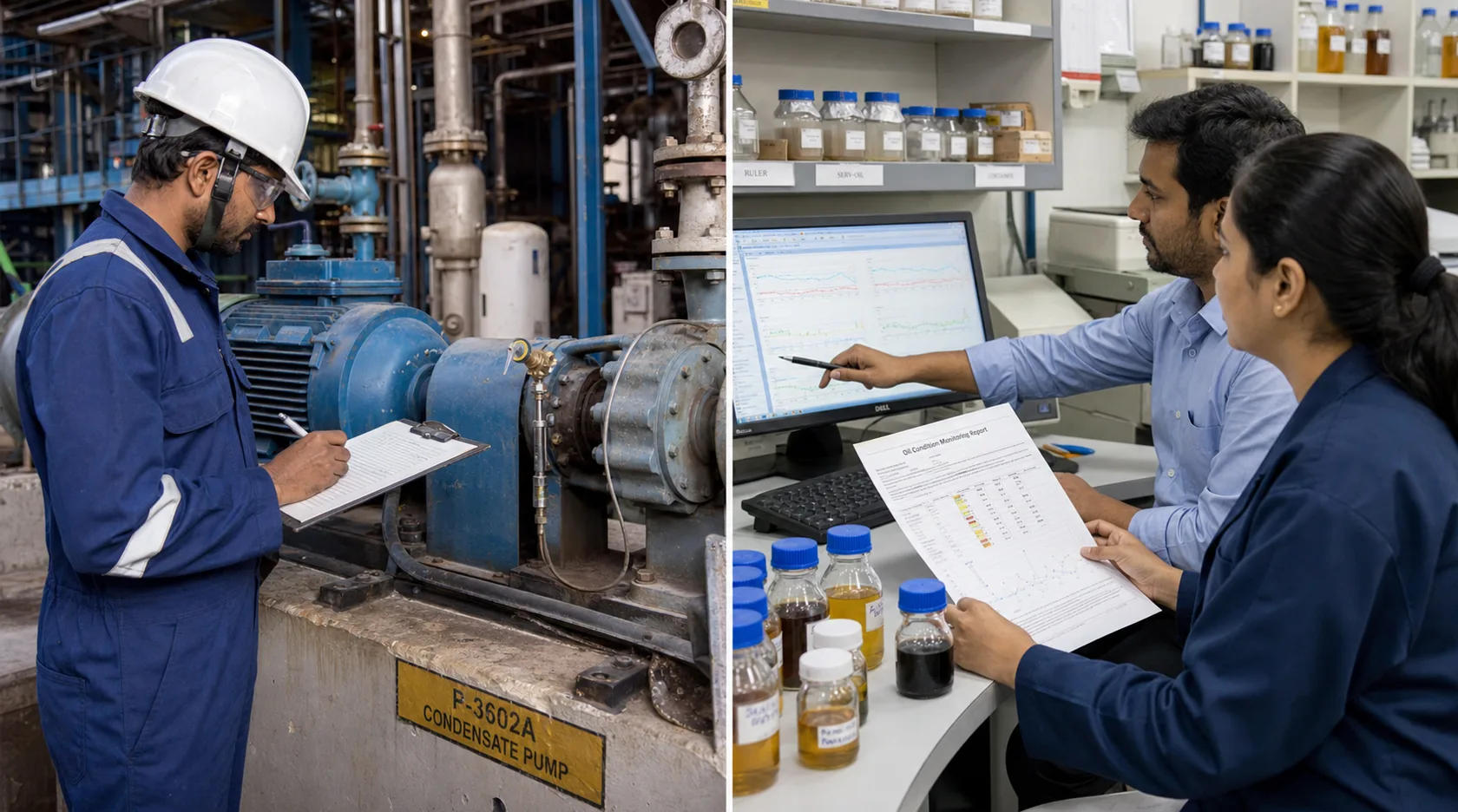
Oil is both a working fluid and a carrier of evidence. Its physical and chemical properties can change during service; contaminants may enter the system; and wear material may be generated by components. A useful oil analysis programme examines these evidence streams together.
The strongest decisions come from a representative sample, a relevant test set and comparison with the correct reference—such as a supplied specification, fresh-oil baseline or the asset's own historical trend.
Four connected evidence streams
Review viscosity, acidity or reserve alkalinity and condition indicators relevant to the oil and application.
Investigate water, particles, fuel, soot, dirt or mixed-fluid concerns that may affect lubrication and reliability.
Use elemental and wear-debris evidence with equipment metallurgy, maintenance history and operating context.
Compare repeat samples from a consistent point to identify developing change and support maintenance decisions.
Laboratory test scope
Not every sample requires every test. Chem-Tech confirms the methods, sample quantity and current laboratory scope before testing.
Physical and chemical properties used to assess how the lubricant has changed in service.
Evidence used to investigate ingress, combustion by-products and fluid cleanliness.
Screening and advanced analysis selected around the asset, materials and maintenance question.
Additional properties for hydraulic, turbine, compressor and other industrial-oil applications.
Choose by equipment and lubricant
Application-specific pages explain the typical concerns, sample context and relevant test groups for each lubricant system.
Diesel, gas, automotive, generator and industrial engine lubricants.
→02Hydraulic pumps, valves, servo systems and mobile or industrial machinery.
→03Gearboxes, transmissions, axles, differentials and final drives.
→04Steam, gas and hydro turbine lubrication and control-oil systems.
→05Air, gas and refrigeration compressor lubricant applications.
→06Manufacturing, mining, construction, fleets, marine and power-generation equipment.
→A repeatable evidence cycle
A maintained programme is more valuable than a disconnected sequence of samples.
Read oil sampling guidanceTell us whether the objective is baseline creation, routine trending, troubleshooting or a focused contamination or wear investigation.
Provide the equipment, component, oil grade, operating hours and relevant maintenance or top-up history.
Use a clean bottle and a repeatable sampling point while the system is in a suitable operating condition.
Chem-Tech confirms a scope appropriate to the lubricant, asset, question and current laboratory capability.
Use current findings, previous results and operating information to plan maintenance, resampling or further investigation.
For fleets, plants and critical assets
Build asset histories, standardise sampling points, select repeat test groups and review developing lubricant, contamination and wear patterns across equipment.
Explore Oil Condition MonitoringImprove the value of every result
Good laboratory data becomes more useful when the sample and the asset are clearly identified.
Before dispatch
Technical output
Oil analysis FAQ
Used oil analysis is the laboratory examination of an in-service lubricant to provide evidence about lubricant condition, contamination and wear-related changes within the equipment.
Yes. Fresh oil is commonly reviewed for quality, identity or comparison with an agreed requirement. Used oil analysis focuses on changes that occurred during service and is more useful when equipment, oil and operating history are supplied.
The suitable test set depends on the oil type, equipment, operating environment and maintenance question. Engine, hydraulic, gear, turbine and compressor oils should not automatically receive the same test scope.
A single result can identify a concern, but it should not be treated as a guaranteed failure prediction. Consistent sampling, operating context and trend data usually provide a stronger basis for maintenance decisions.
Include the asset and component ID, lubricant name and grade, oil and equipment hours, sampling point, sampling date, recent top-ups or oil changes, maintenance events and the reason for testing.
Yes. The programme can be structured around critical assets, repeat sampling points, appropriate test groups and trend-based review. The scope and intervals are agreed for the equipment and operating context.
Used-oil evidence
Used-oil analysis is strongest when representative repeat samples are linked with the correct asset, lubricant, hours, maintenance events and operating symptoms. Trends can then support maintenance review and focused investigation.
Review viscosity, acidity, reserve alkalinity and degradation indicators relevant to the oil.
Assess water, particles, fuel, soot, dirt or mixed-fluid evidence.
Interpret elemental or wear-debris findings with component metallurgy and operating context.
Compare consistent repeat samples to identify developing change and guide the next review.
Discuss your sample
Share the lubricant type, equipment details, operating history and testing objective. Chem-Tech will help define the appropriate scope.