
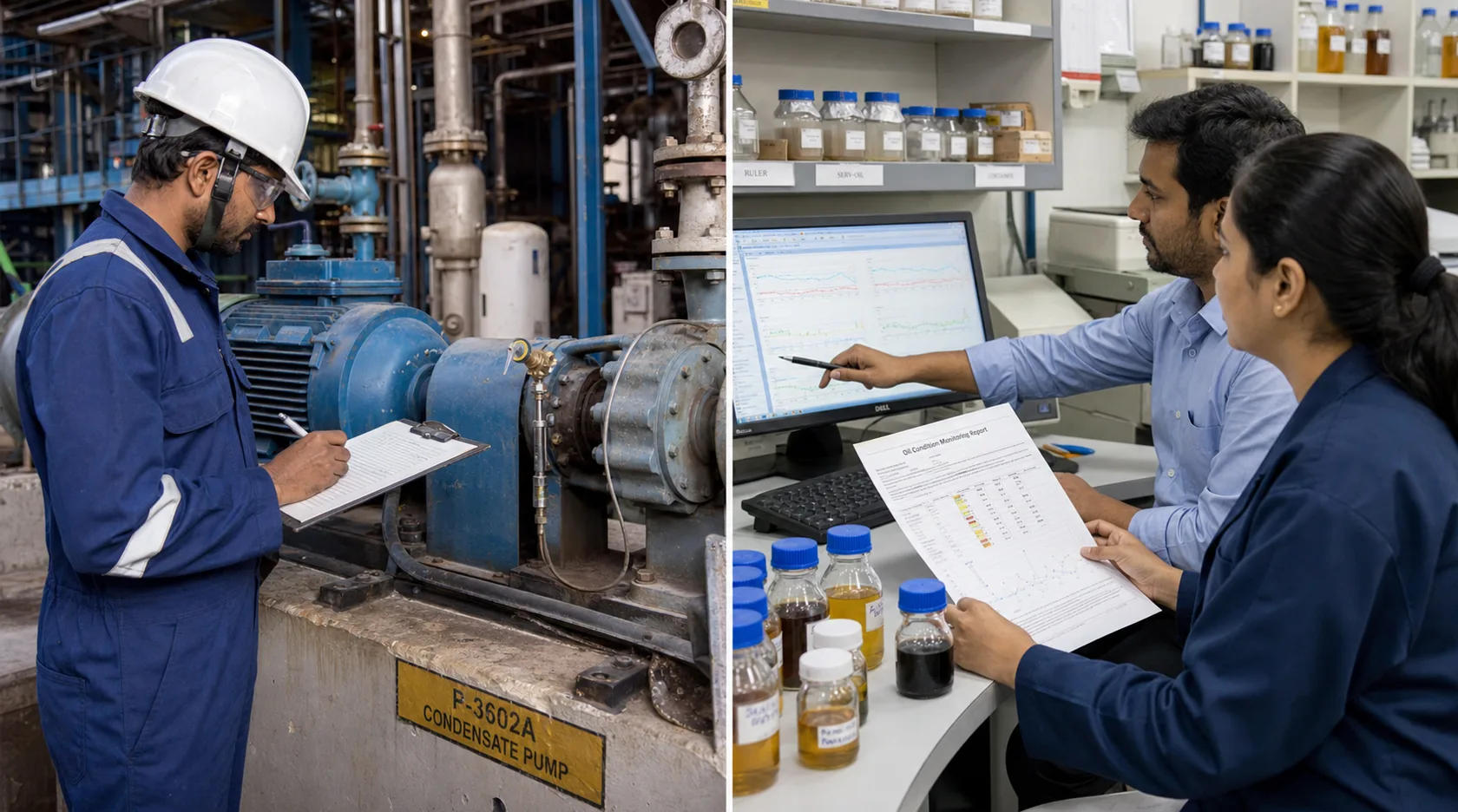
01
Routine condition monitoring
Track lubricant condition, contamination and wear over time so maintenance teams can act on developing changes.
Fresh and used oil testing · India
Oil testing laboratory in India for fresh and used lubricants, with sample coordination through Chem-Tech's laboratory facilities in Pune, Maharashtra.
Start with your maintenance question
Oil testing can assess the lubricant itself, contaminants entering the system and material associated with equipment wear. These are connected—but they are not the same question.
Chem-Tech helps customers choose a relevant scope for fresh-oil verification, routine used-oil monitoring, troubleshooting or a focused investigation. Supplying the equipment and operating context makes the result more useful.
What do you need to know?
Track lubricant condition, contamination and wear over time so maintenance teams can act on developing changes.
Investigate water, fuel, soot, dirt, particles or mixed-fluid concerns affecting the oil or equipment.
Check selected properties of new, delivered or stored oil against an agreed specification or reference sample.
Review wear-related evidence with the component, oil grade, operating history and symptoms supplied by your team.
Choose by lubricant and equipment
Each application has different operating stresses, contaminants, wear mechanisms and useful test combinations.
Diesel, gas, automotive, generator and industrial engines.
→02Pumps, valves, servo systems and mobile or industrial hydraulics.
→03Industrial gearboxes, enclosed gears and heavy-duty drivetrains.
→04Transmissions, differentials, axles and final-drive systems.
→05Steam, gas and hydro turbine lubrication and control systems.
→06Air, gas and refrigeration compressor applications.
→Understand the laboratory scope
Not every sample requires every parameter. The final scope depends on the oil, application, available sample quantity and purpose of testing.
Shows whether the lubricant has changed, degraded or may no longer be suitable for continued service.
Helps identify unwanted material entering or developing within the lubricant system.
Examines material associated with component wear and should be read with equipment metallurgy and history.
Additional tests selected for the oil type, system design and operating concern.
From question to action
Representative sampling and complete asset information are as important as the laboratory measurement.
Read oil sampling guidanceRoutine monitoring, troubleshooting, fresh-oil verification and contamination investigations require different test scopes.
Share the lubricant name and grade, asset, component, oil hours, equipment hours and recent maintenance history.
Use a clean bottle and a consistent sampling point. Avoid stagnant zones, drain bottoms and contaminated containers.
Chem-Tech confirms the parameters, methods, sample quantity and reporting requirement before testing.
Compare the findings with the correct specification, fresh-oil baseline, previous trend and operating condition.
Before sending the sample
Label the bottle clearly and provide enough context for the laboratory to understand what the sample represents.
Sample identification
Reason for testing
For fleets, plants and critical assets
Standardise asset details, sampling points, test groups and intervals so developing condition, contamination and wear patterns are easier to identify.
Explore Oil Condition MonitoringOil testing FAQ
The correct test set depends on the oil, equipment and decision you need to make. Share the application and concern; Chem-Tech will help define a relevant scope rather than applying the same package to every sample.
Sample quantity depends on the selected tests. Confirm the scope before dispatch so the laboratory can advise the required bottle type and volume.
A single result may identify an abnormal condition, but it should be reviewed with sampling quality, operating information, maintenance history and previous results. Trend data usually provides stronger evidence.
Provide the asset and component ID, lubricant grade, oil and equipment hours, sampling point and date, top-ups, oil changes, filtration or repairs, and the reason for testing.
Yes. Fresh-oil testing can support quality or specification checks, while used-oil analysis assesses changes during service. The parameters and interpretation basis are different.
Fresh and used oil testing
Oil testing should be matched to the lubricant, equipment and decision required. A fresh-oil check, routine condition sample and failure investigation use different parameters, references and interpretation context.
Check selected delivered, stored or reference-oil properties against an agreed basis.
Assess changes in lubricant properties alongside oil hours, equipment hours and maintenance history.
Investigate water, particles, fuel, soot, mixed fluids and wear-related evidence.
Add performance parameters relevant to engine, hydraulic, gear, turbine, compressor or other systems.
Discuss your requirement
Share the application, lubricant grade, sample status and reason for testing. Chem-Tech will help confirm an appropriate scope and sample quantity.