
Technical perspective
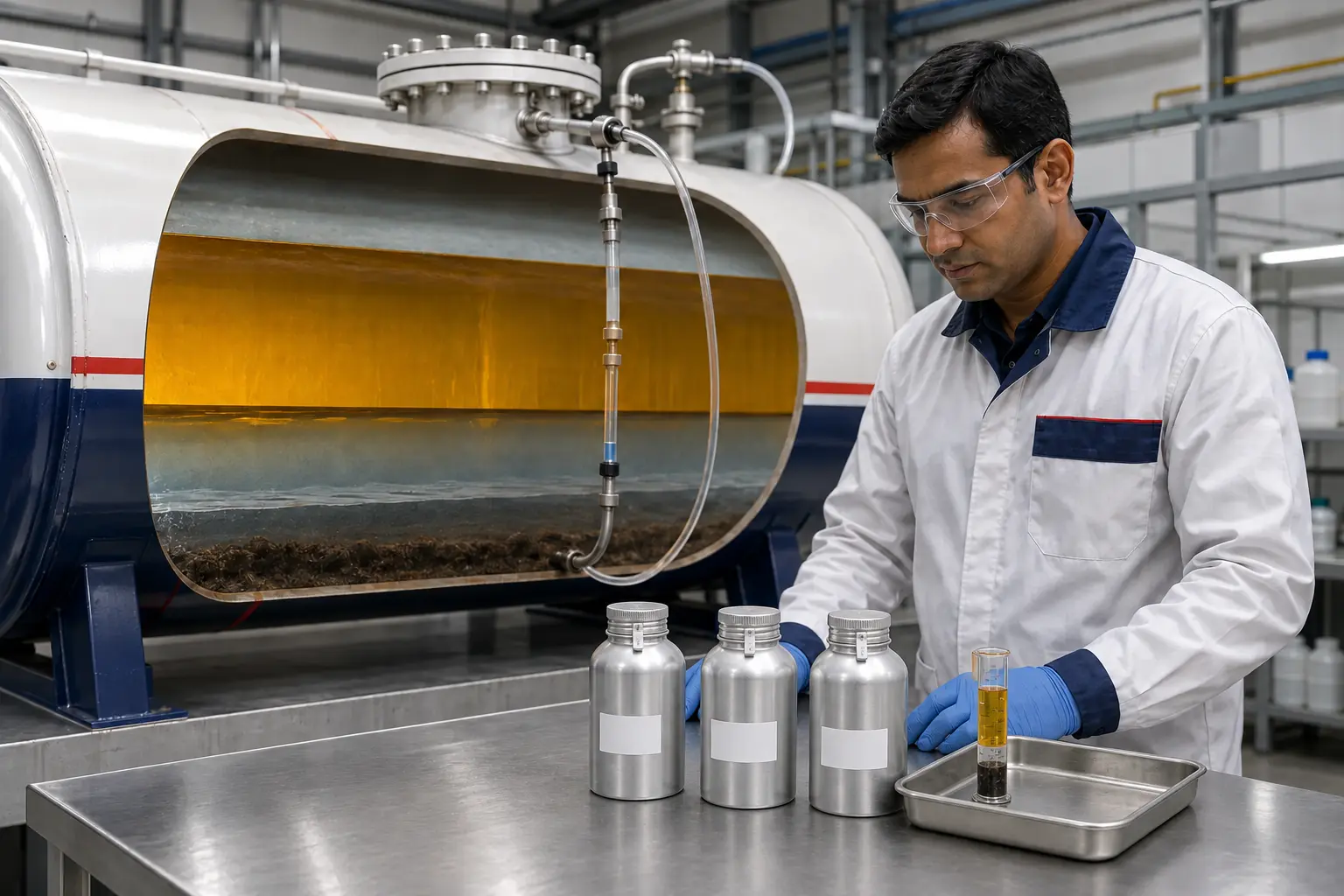
Stored diesel changes even when the tank is not being used. Breathing introduces moisture, temperature cycles move water, low turnover allows sediment to settle, and microorganisms may grow at fuel-water interfaces. A top sample can remain bright while the suction zone contains water, rust, sludge or degraded fuel.
Chem-Tech designs storage-tank investigations around location. Bulk fuel, low-point fuel, associated water, sediment and blocked-filter material are kept separate and linked to the tank drawing and operating history. This shows where the problem resides and whether treatment, cleaning, filtration or fuel disposition needs consideration.
Article section
A tank is a set of contamination zones
Fuel near the surface, circulating fuel, suction-level fuel and the tank bottom may tell different stories. A single composite can dilute the zone that matters. The sampling plan should match the symptom: failed start, blocked filter, water alarm, long storage, recent delivery or visible corrosion.
Microbial contamination is one possible cause of sludge and filter blockage, not the only one. Rust, dust, oxidised fuel, unstable blends and maintenance residue can produce similar evidence. Chemical and physical testing should therefore accompany microbial screening when root cause is required.
- Generator or dispenser filters block repeatedly after short service.
- Water-bottom volume increases or drains show haze, sludge or corrosion debris.
- Fuel has remained in low-turnover storage through seasonal temperature changes.
- A tank problem begins after a delivery, cleaning, transfer or ventilation change.
Article section
Map samples to the tank and fuel movement
Record tank capacity, current level, age of fuel, receipt history, water-drain practice, turnover, breathing arrangement and suction height. Mark each sample point. This allows a bottom contamination result to be interpreted without condemning otherwise usable bulk fuel, and vice versa.
Fuel-condition tests assess water, sediment, oxidation-related change and specification properties. Microbial screening is applied to suitable fuel and associated-water portions. Filter debris and tank solids may require separate examination to distinguish biological material from rust or external dirt.
Bulk fuel
Assesses the material likely to reach equipment under normal withdrawal.
Low point
Targets settled water, sediment and interface contamination that top sampling may miss.
Filter evidence
Shows the material the system actually captured during the failure period.
History
Delivery, turnover, drainage and maintenance records connect laboratory findings with cause.
Article section
Indicative stored-diesel investigation packages
The laboratory panel and sample locations are agreed together. A broad test panel on one unrepresentative bottle is less useful than targeted tests on correctly located samples.
| Package | Use when | Indicative tests and methods | Decision supported |
|---|---|---|---|
| Tank condition screen | Routine long-term storage review | Appearance; water — ASTM D6304/ISO 12937; sediment — ASTM D473; density — ASTM D4052 | Identify water, solids and gross fuel change |
| Filter-blocking investigation | Repeated blockage or fuel-system alarms | Total contamination — EN 12662; cleanliness — ISO 4406; microbial screen by agreed method; retained filter/debris examination | Separate particulate, biological and degradation sources |
| Fuel fitness review | Extended storage or disputed performance | Oxidation stability — ASTM D2274; acid number — IS 1448 (P2); distillation — ASTM D86; flash point and viscosity as applicable | Support use, conditioning or disposition decision |
Biocide selection and tank entry are safety-critical activities outside a laboratory report. Corrective action must follow the site owner's fuel, confined-space, fire and environmental controls.
Request a scope and package discussionArticle section
Collect separate bulk, low-point and water samples
Use a competent fuel-sampling team and a tank-specific plan. Never improvise access to a hazardous storage tank.
- Draw bulk and bottom-zone samples into separate labelled containers.
- Collect associated water in a suitable separate container when present.
- Retain a representative blocked filter or debris portion without washing it.
- Record tank level, temperature, last delivery, last drain and time since circulation.
- Photograph sample appearance and maintain chain of custody for disputes.
Article section
Correct the tank condition and verify recovery
Possible responses include water removal, controlled filtration, tank cleaning, segregation, supplier investigation or fuel disposition. The correct response depends on where contamination is located and whether the bulk fuel still meets the governing requirement.
After action, repeat samples at the same defined points and monitor filter life. A clear top sample immediately after treatment is not enough to show that bottom water, biofilm or sediment has been controlled.
- Remove and investigate persistent water entry rather than draining symptoms only.
- Keep treated and untreated fuel evidence traceable during corrective work.
- Verify tank, transfer line and day-tank zones separately when systems are linked.
- Set a future inspection and sampling frequency based on turnover and history.
Apply this guidance