Technical perspective
Grease is a semi-solid lubricant whose apparent stiffness or consistency affects pumpability, sealing, channeling and the way it remains in a bearing or component. NLGI consistency grades provide a convenient classification, while cone penetration testing provides the measured basis used for that classification.
Consistency is important, but it is only one dimension of grease performance. Two greases can share an NLGI grade while having very different base oils, thickeners, additives, water resistance, mechanical stability and temperature capability.
Article section
What worked penetration measures
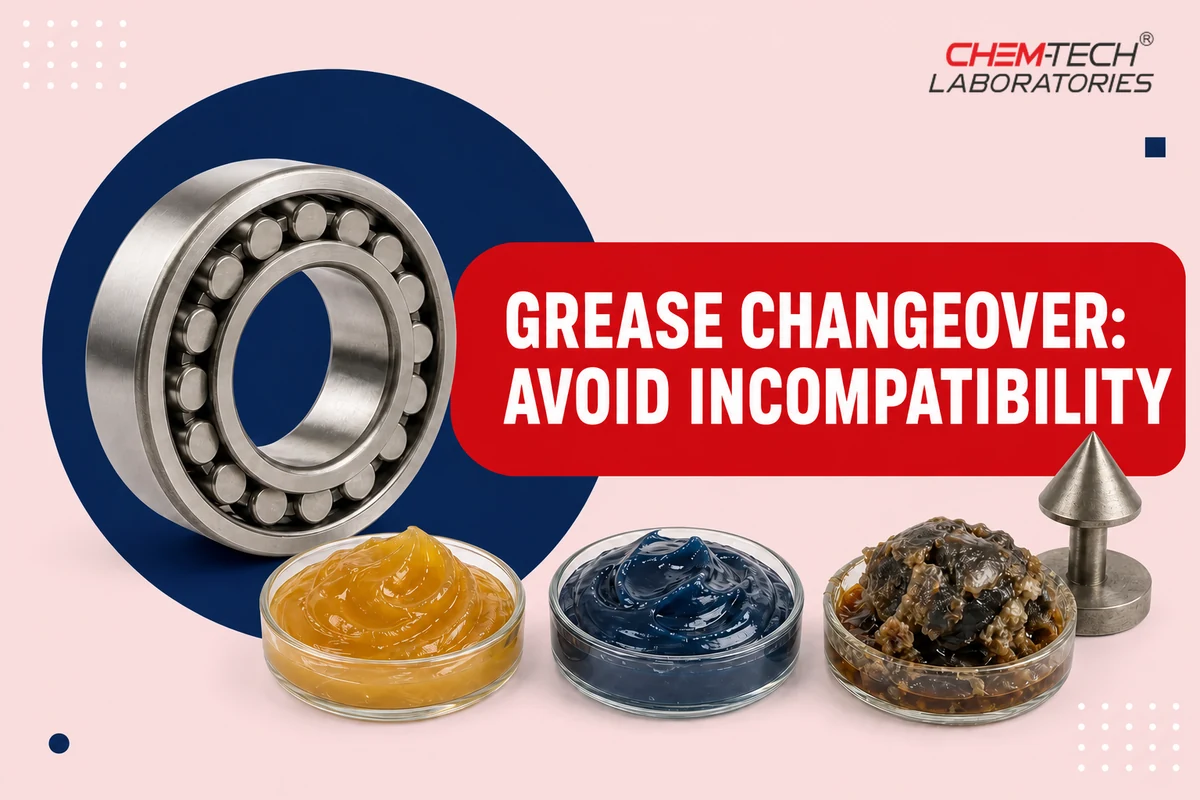
ASTM D217 describes cone-penetration procedures for lubricating greases. In a worked penetration test, the grease is mechanically worked under defined conditions and a standard cone is allowed to penetrate the prepared sample. Greater penetration corresponds to a softer grease; lower penetration corresponds to a firmer grease.
Article section
How NLGI grade is used
NLGI grades group worked-penetration ranges into familiar consistency classes. The grade helps engineers discuss handling and application behaviour, but it should not be treated as a complete specification for interchangeability. A bearing, centralised lubrication system or open gear can require much more than a matching consistency number.
Article section
Why used-grease consistency can change
- Mechanical shear can soften or, for some formulations, harden the grease structure.
- Oil separation or evaporation can leave the remaining grease firmer.
- Water, dust, process material or incompatible grease can alter texture and consistency.
- High temperature and oxidation can change both the base oil and thickener system.
Article section
Interpret consistency with the rest of the grease condition
When troubleshooting, combine penetration or consistency evidence with water, elemental analysis, FTIR, wear debris, dropping point or other tests appropriate to the application. Compare used grease with a known fresh reference whenever possible, because colour and texture alone are unreliable indicators of formulation identity or remaining serviceability.
Article section
Selecting grease evidence for Indian equipment
Greases used in mining, steel, cement, automotive and general manufacturing operate under widely different loads, speeds, temperatures and contamination exposure. Consistency is important, but an NLGI grade by itself does not establish that two greases are interchangeable or suitable for the same bearing.
For procurement checks, troubleshooting or changeover studies, compare the agreed grease specification and relevant performance properties in addition to penetration. Used-grease samples can provide further evidence where the concern is softening, hardening, contamination or abnormal bearing condition.
Apply this guidance