Technical perspective
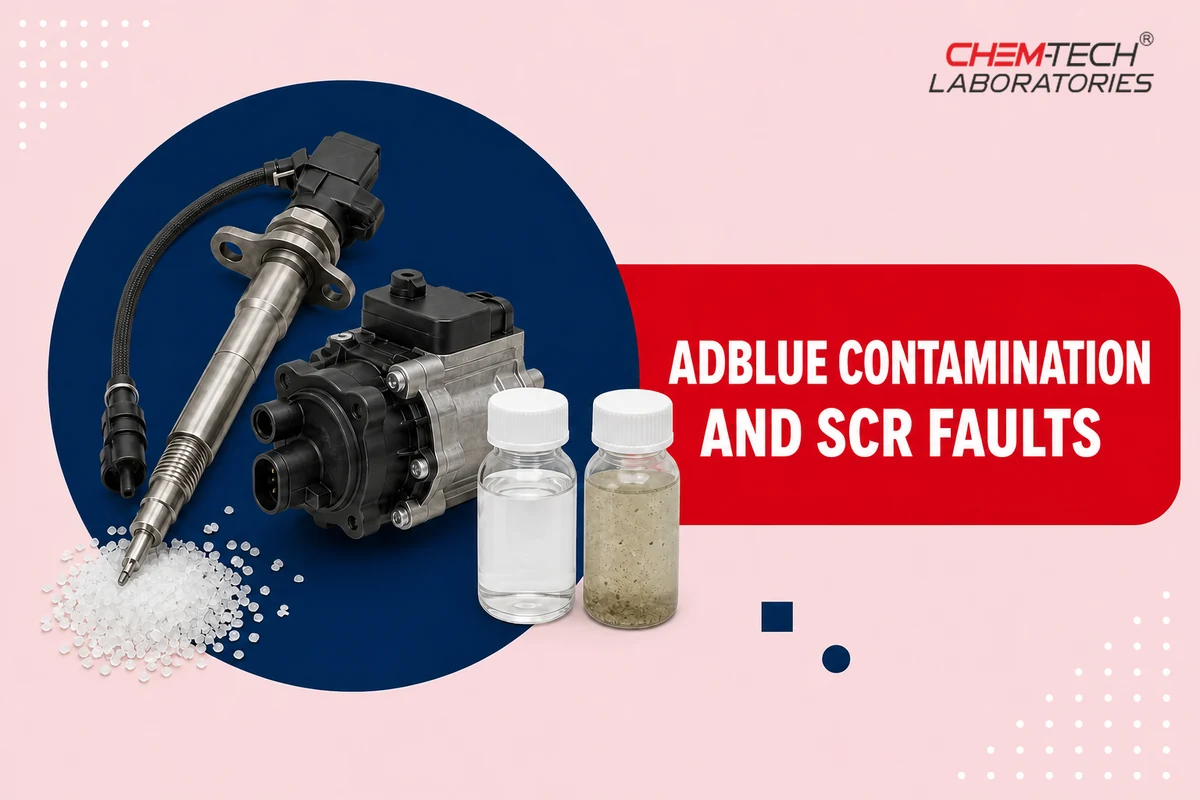
An SCR warning, dosing fault or white crystal deposit does not automatically prove that the AdBlue is out of specification. The fault may involve the fluid, storage and transfer equipment, the tank, dosing hardware, temperature exposure or another part of the SCR system. Replacing the injector before checking the fluid pathway can make an expensive problem return.
ISO 22241-1 specifies the quality characteristics of AUS 32 needed for selective catalytic reduction systems. The investigation should preserve enough evidence to determine whether the fluid reaching the vehicle or equipment still matches the intended quality.
Investigation guidance
Map the AdBlue journey
- Supplier container or bulk delivery.
- Storage tank, cap, vent and temperature exposure.
- Pump, hose, nozzle, funnel or transfer container.
- Equipment tank and dosing circuit.
Contamination can enter at any transfer point. A clean supplier sample does not rule out a dirty dispensing container, and a tank sample does not by itself diagnose a blocked injector. Traceability matters.
Investigation guidance
Collect samples before topping up or cleaning
Where safe and practical, retain separate, clearly identified samples from the suspect equipment tank and the current supply source. Do not pour samples back into the system. Record batch or delivery information, storage duration, container materials, recent top-ups, warning codes and photographs of deposits.
- Use clean, compatible sampling equipment confirmed for the agreed analysis.
- Keep suspect and reference samples separate.
- Do not assume clear appearance proves compliance.
- Confirm the required quantity and container with the laboratory before dispatch.
Investigation guidance
Separate fluid quality from hardware diagnosis
A fluid investigation can examine the agreed ISO 22241 quality characteristics and look for evidence of dilution or contamination. Hardware diagnosis remains necessary when fluid quality is acceptable or when deposits may result from leakage, heating, evaporation or operating conditions.
If the supply sample is acceptable but the equipment-tank sample is not, focus on local handling, residual material or tank contamination. If both are affected, examine storage and supply. If neither is affected, continue the SCR-system diagnosis rather than forcing a fluid explanation.
Investigation guidance
Prevent the same fault from returning
- Use dedicated, clean and closed transfer equipment.
- Keep delivery and batch traceability.
- Protect storage and dispensing equipment from dirt and incompatible materials.
- Train operators not to transfer AdBlue with fuel, oil or general-purpose containers.
Apply this guidance