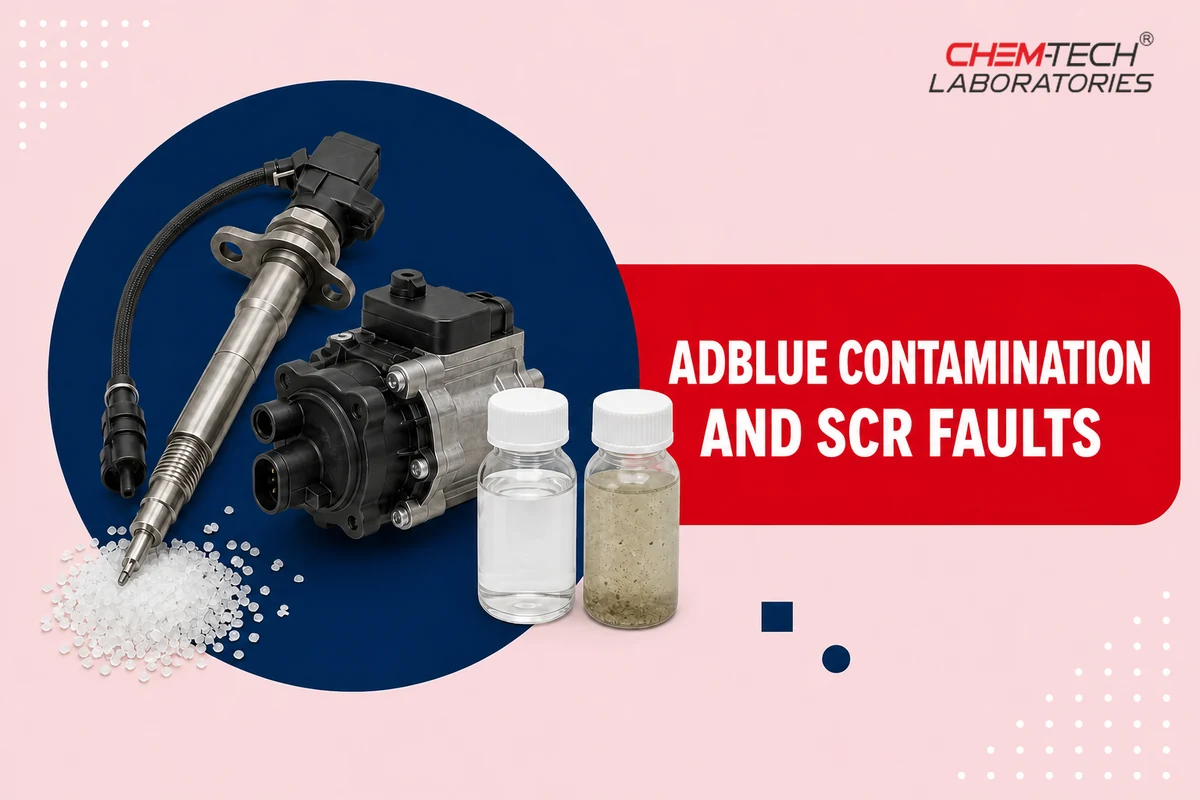
Technical perspective
AUS 32 is sensitive enough to contamination that the sampling container and transfer process can become part of the problem. A laboratory can only assess the material it receives, so residues from a bottle, hose or funnel may create an apparent field failure that was introduced during sampling.
The same principle applies to storage. Good-quality fluid can become nonconforming if it is exposed to incompatible materials, dirty equipment or cross-contamination after delivery.
Article section
Use dedicated compatible sampling equipment
- Use clean containers intended for DEF/AUS 32 sampling; do not reuse fuel or coolant bottles.
- Avoid funnels, pumps and hoses that have handled unrelated chemicals unless an approved cleaning procedure is validated.
- Keep caps and bottle openings protected from dust, hands and work surfaces.
- Label the exact location, batch, container and time of sampling immediately.
Article section
Choose the sample location from the question
A supplier-quality question may require a sealed or retained batch sample. A site-handling question requires a bulk-tank or dispensing sample. An equipment fault may require the reservoir or dosing-system fluid. When source attribution matters, collect the locations in parallel so the laboratory can compare them rather than relying on one isolated result.
Article section
Protect stored fluid from cross-contamination
Use dedicated tanks and dispensing equipment compatible with the applicable AUS 32 handling guidance. Prevent fuel, lubricants, tap water, cleaners and process chemicals from entering the system. Keep equipment closed and maintain housekeeping around fill points because invisible contamination can be more significant than colour or clarity suggests.
Article section
Record the handling history with the sample
Include supplier, batch, delivery date, storage container, transfer equipment, equipment ID and any recent cleaning or maintenance. This context helps distinguish production quality from site-introduced contamination and makes repeat testing far more useful when an unexpected result is found.
Article section
AdBlue sampling and storage controls for Indian users
AdBlue should be handled as a contamination-sensitive product. A bottle or transfer tool previously used for fuel, coolant, detergent or ordinary water can compromise the sample and may also contaminate the vehicle or storage system.
For Indian fleet and depot operations, dedicate compatible storage and transfer equipment, keep containers closed and protected from avoidable heat and contamination, and use clean sample containers. Record the batch, source, storage point and sampling location so an abnormal result can be traced back through the handling chain.
Apply this guidance