

Industry overview
Oil analysis for truck fleet oil analysis operations
Truck fleets need a repeatable method for comparing similar components across many assets. Engine, transmission, axle and differential samples must remain tied to the correct vehicle, lubricant and service interval to make the data useful.
Fleet monitoring combines laboratory results with odometer or operating hours, oil hours, top-up history, maintenance activity and reported symptoms. The resulting history can support inspection and maintenance prioritisation without treating one result in isolation.
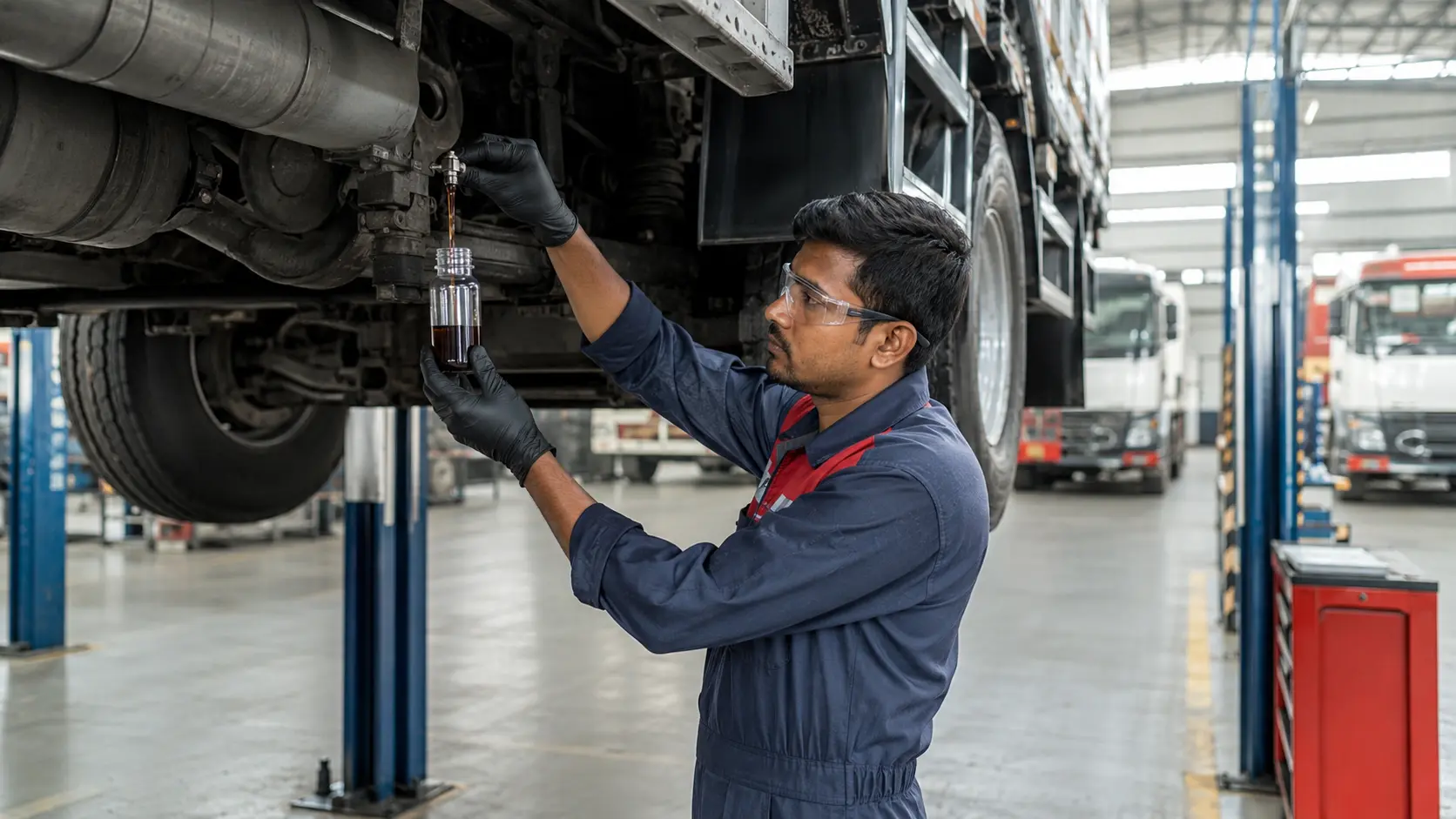
Consistent vehicle, component, oil-distance and maintenance records turn individual samples into a usable fleet trend.
Assets and systems
Equipment covered by the monitoring programme
- Diesel enginesFresh and used engine-oil monitoring for degradation, contamination and wear-related indicators.
- TransmissionsFluid condition and wear review for manual, automated and application-specific transmissions.
- Axles and differentialsViscosity, water, elemental and ferrous-debris screening for loaded gear systems.
- Mixed fleet equipmentStandardised submission and reporting across makes, models, depots and operating duties.
Technical review
Condition and contamination priorities
Soot and fuel dilution
Engine-oil indicators can support review of combustion, dilution and service-condition concerns.
Viscosity and reserve
Viscosity, acidity and reserve indicators are reviewed with oil hours, grade and service history.
Wear and contaminants
Elemental results support component-focused review when metallurgy and prior data are available.
Fleet consistency
Consistent labels, sampling timing and asset records make cross-vehicle comparison more dependable.
Applicable programme scopes
Oil testing packages for the industry context
The final scope is selected for the lubricant, component, operating context and monitoring objective. The programme options below are drawn from Chem-Tech's published Oil Condition Monitoring scopes.
Engine Oil - Basic
Routine screening for automotive, construction and mining engines.
View included test families
- Appearance
- Kinematic Viscosity at 40°C
- Kinematic Viscosity at 100°C
- Viscosity Index
- Water Content
- Total Acid Number
- Total Base Number
- Soot Content
- Elemental Analysis
Engine Oil - Advanced
Expanded engine-oil condition review with degradation and dilution indicators.
View included test families
- Appearance
- Kinematic Viscosity at 40°C
- Kinematic Viscosity at 100°C
- Viscosity Index
- Water Content
- Total Acid Number
- Total Base Number
- Soot Content
- FTIR — Oxidation / Nitration
- Elemental Analysis
- Fuel Dilution
Axle Oil
Condition and wear review for axle and final-drive lubricants.
View included test families
- Appearance
- Kinematic Viscosity at 40°C
- Kinematic Viscosity at 100°C
- Viscosity Index
- Water Content
- Total Acid Number
- Elemental Analysis
- PQ Index
Transmission Oil
Condition and wear review for transmission oils and fluids.
View included test families
- Appearance
- Kinematic Viscosity at 40°C
- Kinematic Viscosity at 100°C
- Viscosity Index
- Water Content
- Total Acid Number
- Elemental Analysis
- PQ Index
Differential Oil
Condition and wear review for differential and severe-duty gear systems.
View included test families
- Appearance
- Kinematic Viscosity at 40°C
- Kinematic Viscosity at 100°C
- Viscosity Index
- Water Content
- Total Acid Number
- Elemental Analysis
- PQ Index
Gear Oil
Condition and wear review for industrial and automotive gear oils.
View included test families
- Appearance
- Kinematic Viscosity at 40°C
- Kinematic Viscosity at 100°C
- Viscosity Index
- Water Content
- Total Acid Number
- Elemental Analysis
- PQ Index
Allied work
Programme support beyond laboratory testing
Sample identification
Record vehicle, component, oil grade, distance or hours, and maintenance history with every sample.
Explore supportFleet trend reporting
Use connected reporting to follow samples and retain asset-level result history.
Explore supportDiesel and coolant testing
Extend an investigation to diesel fuel or coolant when the operating context requires it.
Explore supportBefore sampling
Preserve equipment context
Record the asset, component, lubricant grade, sampling point, oil hours, equipment hours, top-up history, filter changes and relevant maintenance activity.
Review sampling guidelinesAfter reporting
Interpret results as a trend
Review repeat data with equipment history, operating conditions, maintenance observations and previous results rather than relying on one value alone.
Read the oil-analysis guideDiscuss your programme